How to Launch Competitor Conquesting Advertising

Competitor conquesting advertising puts your ads in front of people considering a rival. To launch a B2B campaign, start with searches that signal a buyer may be open to switching, such as a competitor's name plus "alternative." Keep those ads in a separate campaign, send clicks to a useful comparison page, and track qualified opportunities and revenue, not just clicks.
The hard part is not getting seen. Competitor traffic can be costly, and some visitors only want their current provider's support. Set a small test budget, exclude those searches, and brief your sales team before launch. Then put more spend behind the terms that bring in real buyers.
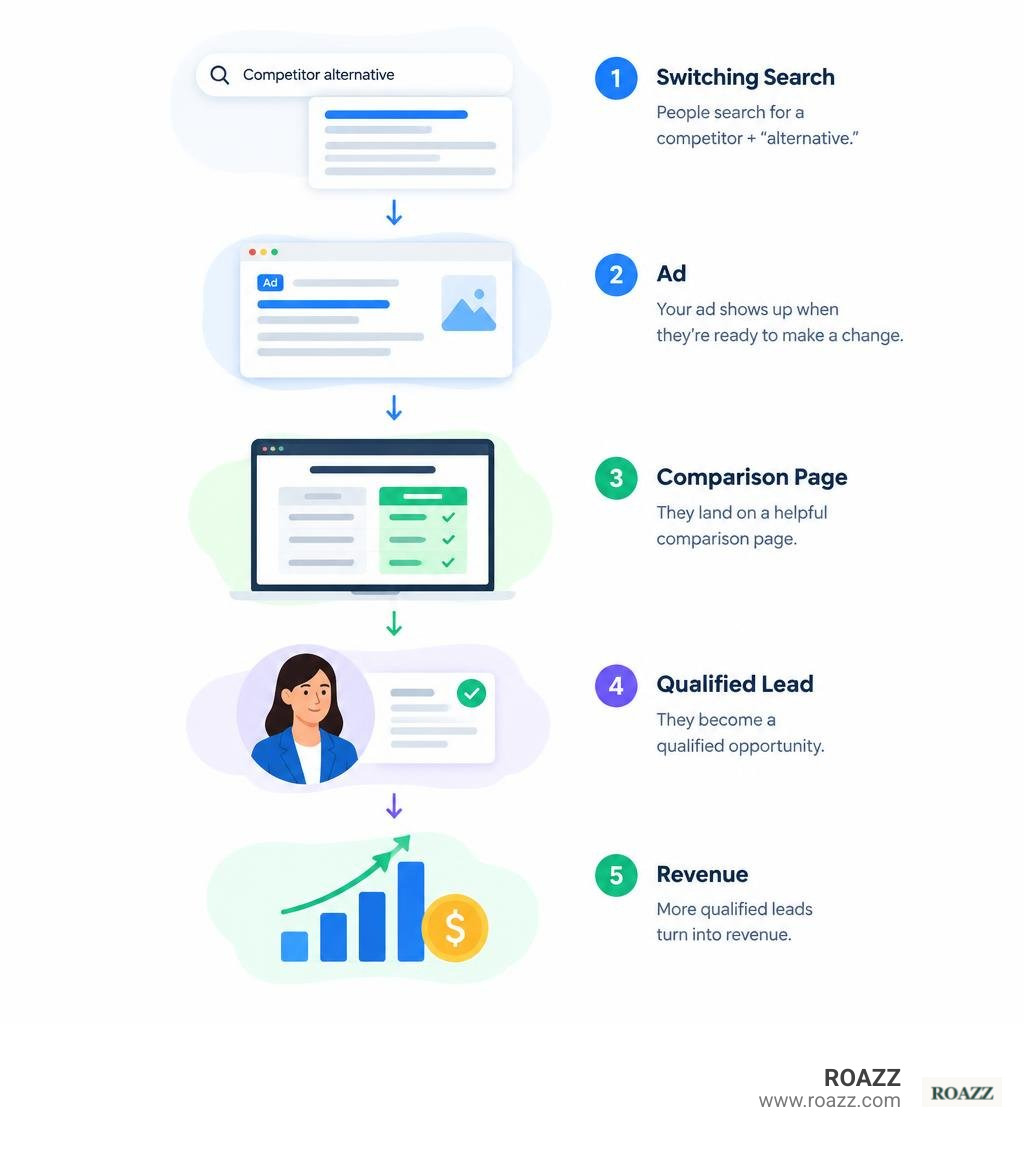
The Mechanics, Costs, and Economics of B2B Conquesting
Conquesting seems simple on paper: identify a rival, bid on their brand name, and intercept their prospective clients. However, the economic reality behind the ad auction tells a much more demanding story.
When you bid on your own brand terms, your ads achieve high relevance, yielding Quality Scores between 8 and 10, strong click-through rates (CTR), and modest costs-per-click (CPC). Category keywords (like "enterprise accounting software") generally perform solidly as well. In contrast, bidding directly on a competitor’s brand name disrupts this dynamic entirely.

Search engines assign relevance scores based on user intent. When a buyer searches for "Competitor X," the search engine expects that user to click on Competitor X. Showing an ad for your alternative solution means your expected CTR drops significantly. Because the algorithm prioritizes user experience, it penalizes low relevance by inflating your required bid. Understanding these auction dynamics is why partnering with an expert Google Ads management team is essential before allocating major budgets.
| Metric / Dimension | Competitor Brand Keywords | Standard Category Keywords |
|---|---|---|
| Typical Quality Score | 2 to 5 out of 10 | 6 to 9 out of 10 |
| Cost Premium | 200% to 500% higher CPC | Baseline standard CPC |
| Average Click-Through Rate (CTR) | Structurally lower (1% to 3%) | Moderate to high (4% to 8%+) |
| Search Intent Profile | Mix of existing users, support seekers, & switchers | Problem-aware shoppers researching solutions |
| Landing Page Bounce Rate | High (50% to 70% if misaligned) | Normalized baseline |
Data from competitive analysis across paid search auctions indicates that 73% of competitive campaigns fail to achieve a positive ROI within 90 days. Much of this failure stems from businesses treating competitor keywords like standard generic search terms, paying massive premiums without setting up operational safeguards.
Quality Score Disruption and Cost Penalties
Google’s ad auction determines ad rank using your maximum bid, expected CTR, ad relevance, and landing page experience. When running competitor conquesting campaigns, the algorithm naturally suppresses both expected CTR and ad relevance.
Industry research on Google Ads competitor keyword research and CPC dynamics shows that 60% of competitor keyword campaigns achieve Quality Scores of only 1 to 3. A Quality Score of 3 can increase your cost-per-click by 200% to 300% compared to a benchmark score of 8. In practice, bidding on a competitor’s name often costs 200% to 500% more than bidding on high-intent category terms.
To keep costs manageable, you must avoid broad brand name bidding and focus your ad spend on problem-aware, high-intent modifiers (such as "competitor pricing," "competitor alternatives," or "cancel competitor").
Legal Framework and Trademark Compliance
A common concern among B2B leaders is whether bidding on a competitor’s name is legal. In the United States and most global ad markets, bidding on competitor brand names within search auctions is entirely legal. Legal precedents under the Lanham Act (including landmark decisions such as 1-800 Contacts v. Lens.com) have established that using competitor trademarks as backend bidding keywords does not constitute trademark infringement.
However, strict rules govern what you can include in your ad copy:
- No Trademarks in Ad Text: Google’s trademark policy permits you to bid on competitor brand terms as keywords, but you cannot use their registered trademark in your ad headlines or body text without explicit authorization, unless qualifying under fair use exceptions (such as legitimate reseller or informational comparison policies).
- Avoid Misrepresentation: Your ad creative must never imply that your business is affiliated with, endorsed by, or identical to the competitor. Confusing the buyer creates immediate regulatory and platform risk.
- Truthful Comparative Advertising: Comparative claims (e.g., "Rated #1 Alternative by Switchers") must be verifiable, factual, and non-deceptive.

High-Performance Formats for Competitor Conquesting Advertising
While paid search remains the most common entry point, modern conquesting strategies span multiple channels. By blending intent-driven search intercepts with advanced programmatic digital advertising and location-based targeting, you can surround competitor prospects at every stage of their evaluation cycle.
Structuring Paid Search for Competitor Conquesting Advertising
Poor account architecture is the fastest way to waste ad spend. Never mix competitor keywords into your general category or brand campaigns; the resulting low Quality Scores will drag down your account-level performance.
- Isolate Into Dedicated Campaigns: Build separate search campaigns solely dedicated to competitor conquesting. This isolates low Quality Scores and allows strict budget control.
- Segment by Intent Tier:
- Tier 1 (High Intent / Switching): Exact match keywords targeting dissatisfaction, such as
[competitor] alternatives,[competitor] pricing, or[competitor] vs [your brand]. Allocate 50% of your conquesting budget here. - Tier 2 (Category Overlap): Phrase match keywords combining the competitor name with your service offering, such as
"competitor" software solution. Allocate 30% of your budget here. - Tier 3 (Pure Brand): Exact match on the standalone competitor brand name
[competitor]. Allocate no more than 20% of your budget here due to high CPC and lower intent.
- Tier 1 (High Intent / Switching): Exact match keywords targeting dissatisfaction, such as
- Aggressive Negative Keyword Exclusions: Exclude search terms that represent non-buyers looking for customer service. Common negative keywords include:
login,sign in,customer service,support,phone number,careers,jobs,portal,documentation, andapp download.
Display, Overlay, and Programmatic Interception
Conquesting extends beyond the search results page. Programmatic networks and browser extensions provide opportunities to engage prospects while they evaluate competing offerings:
- Contextual Display Interception: Programmatically placing banner and native ads alongside third-party editorial reviews, software comparison guides, and industry news that feature your competitors.
- Inline and Overlay Placements: Engaging active shoppers via browser extension networks and retail media platforms with alternative offers or migration incentives when they visit competitor URLs.
- Paid Social Interception: Running targeted campaigns across LinkedIn and Meta that target audience segments interested in competitor solutions, delivering comparative case studies and switching calculators.
Geoconquesting and Real-Time Signal Targeting
Geoconquesting uses mobile location data and virtual geofences to reach prospects who physically visit competitor locations, retail storefronts, industry trade shows, or annual user conferences.
Mobile research highlights that 88% of millennial and Gen Z business decision-makers and consumers expect mobile outreach that reflects their immediate physical context and activities. Landmark consumer campaigns have shown the viral power of location interception—such as Burger King’s Whopper Detour (detailed in coverage of geoconquesting strategies and location-driven demand capture), which used geofencing within 600 feet of rival restaurants to drive over 1 million app downloads in just a few days.
In B2B environments, targeted geofencing digital advertising allows you to set virtual boundaries around a competitor's flagship customer conference. When attendees enter the perimeter, you can serve hyper-relevant mobile display and social ads offering executive roundtables or migration incentives.
Furthermore, integrating real-time business signals takes conquesting efficiency even further. In consumer packaged goods, case studies on inventory-aware real-time competitive targeting revealed that a Fortune 500 brand achieved a +14% household penetration lift, a 3.2x ROAS, and a 2.1x sales lift by dynamically routing ad spend to geographic zones where competitor stock was unavailable. B2B organizations can apply this same logic by dynamically increasing conquesting bids in territories where competitors announce price hikes, service outages, or product deprecations.
Post-Click Execution: Landing Pages and Operational Readiness
Getting the click is only a fraction of the battle. In competitor conquesting, your post-click infrastructure dictates whether the campaign generates revenue or burns budget.
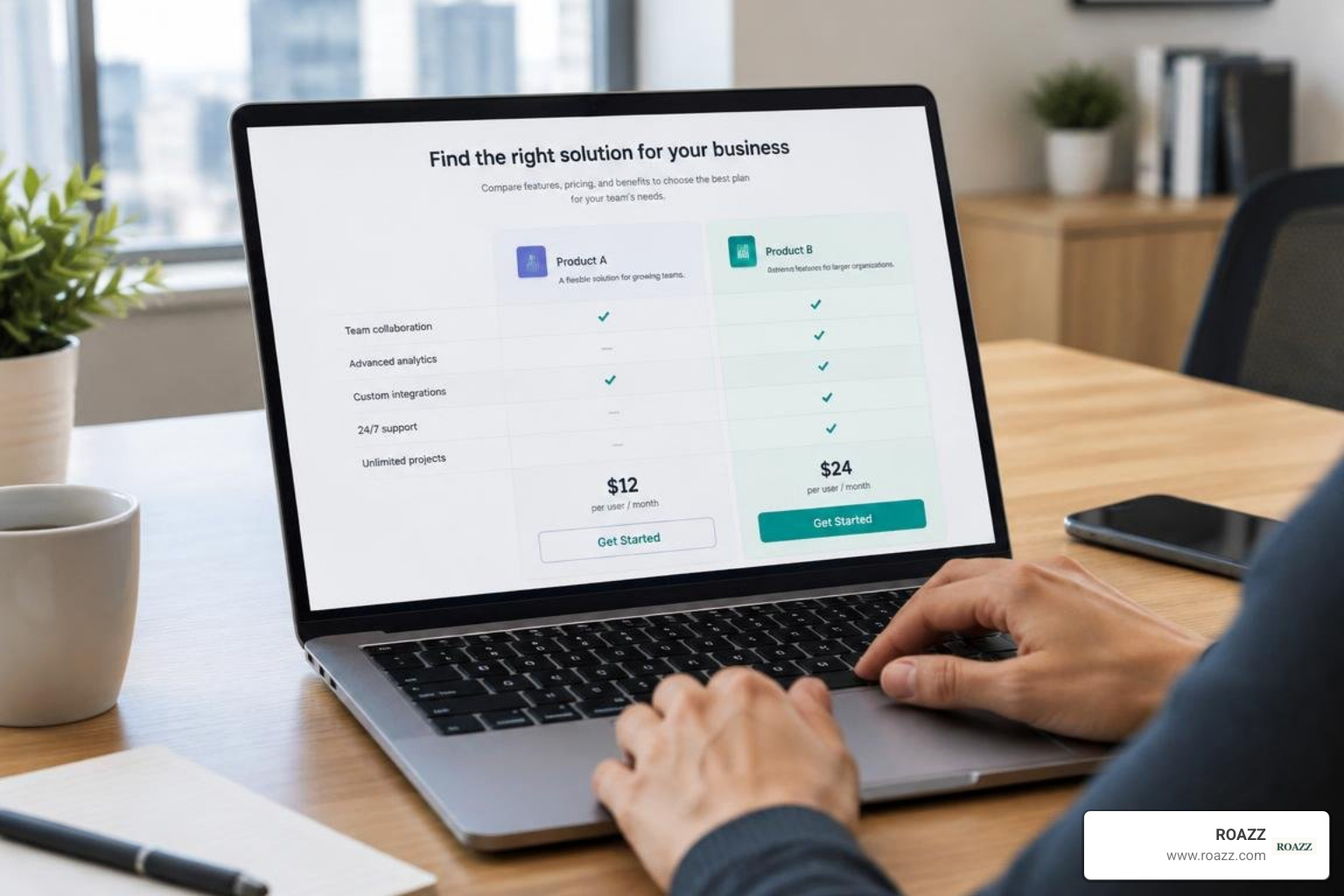
Sending competitor traffic to your generic homepage is the most common reason campaigns underperform. In fact, sending competitor keyword traffic directly to your homepage reduces conversion rates by 50% to 70%. When buyers search for a specific competitor, landing on a generic homepage forces them to hunt for why your solution is relevant, resulting in immediate bounces. Implementing a specialized PPC lead generation framework ensures traffic is routed to dedicated comparison pages built for conversion.
High-Converting Alternative and Comparison Landing Pages
To turn competitor prospects into pipeline, build dedicated comparison pages that address the buyer's evaluation criteria directly:
- Side-by-Side Feature Matrix: Provide a clear, honest comparison of core capabilities, highlighting areas where your platform delivers superior value, support, or pricing flexibility.
- Frictionless Migration Incentives: Offer contract buyouts, free data migration, or onboarding credits to eliminate the perceived risk and cost of switching vendors.
- Social Proof from Verified Switchers: Feature video testimonials and case studies specifically from clients who left that specific competitor for your platform.
- Transparent Pricing Calculators: Help buyers evaluate the total cost of ownership compared to legacy providers.
Sales Enablement and Inbound Call Protocol
Operational readiness is particularly vital for service-oriented and sales-assisted B2B organizations. In service and high-touch commercial sectors, 83% of prospective buyers prefer to call directly when contacting a solution provider.
If your inbound team is unprepared, conquesting leads can quickly turn into operational frustration. Sales reps and customer service representatives (CSRs) frequently answer calls from prospects who mistakenly believe they have dialed the competitor's support desk.
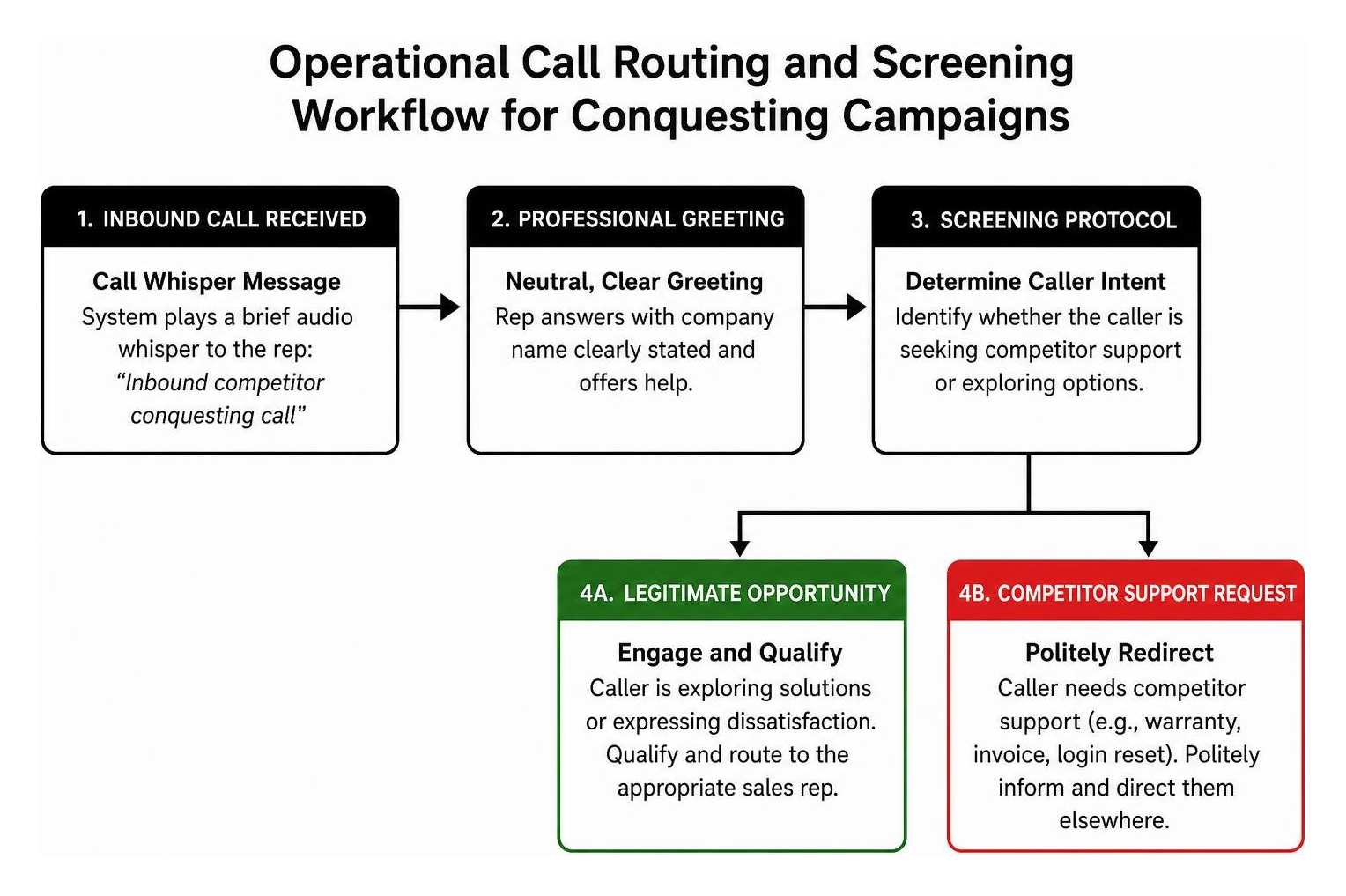
To prevent confusion and capture legitimate opportunities, implement these operational safeguards:
- Call Whisper Messages: Configure your telephony system to play a brief audio whisper (e.g., "Inbound competitor conquesting call") to the sales rep before the call connects.
- Neutral, Professional Greeting: Train reps to answer with your company name clearly stated (e.g., "Thank you for calling ROAZZ, the leading alternative in performance marketing. How can we help you today?").
- Screening Protocol: If a caller is seeking warranty support, an invoice update, or a login reset for the competitor, reps should politely inform them they have reached an alternative provider, screen for potential dissatisfaction, or courteously direct them elsewhere without wasting sales time.
- CRM Tagging: Tag conquesting leads inside your CRM to track sales cycle velocity, conversion rates, and retention trends separately from inbound organic traffic.
Strategic Campaign Management and Attribution
Conquesting campaigns require active bid management and rigorous downstream attribution. Because initial ad metrics (like Quality Score and CTR) are structurally depressed, evaluating success solely on platform metrics will lead you to pause profitable campaigns prematurely.
Aligning your search strategy with a strategic PPC management agency ensures your bidding strategy transitions smoothly from initial manual controls to value-based smart bidding once conversion volume matures.
Measuring ROI in Competitor Conquesting Advertising
To determine whether your conquesting campaigns are truly driving revenue, focus your measurement framework on downstream business milestones rather than vanity metrics:
- Cost Per Qualified Opportunity (CPQO): Track the advertising cost required to generate a sales-accepted lead or confirmed demo.
- Booked Demo & Show Rate: Measure whether competitor prospects convert from landing page submissions to completed sales conversations at rates comparable to generic search leads.
- Sales Pipeline Velocity: Evaluate how quickly competitor switchers move through your sales stages compared to net-new category buyers.
- Customer Lifetime Value (LTV) to CAC Ratio: Compare the acquisition cost of switchers against their long-term contract value and expansion potential.
Managing Retaliation and Brand Defense
Launching an aggressive conquesting campaign can prompt your competitors to bid on your brand terms in return. While competitive bidding is a standard market reality, you should protect your own brand equity with a robust brand defense structure:
- Run Branded Search Defense: Maintain active exact match campaigns on your own brand names. Your high Quality Scores (8 to 10) will keep your defensive CPCs minimal while forcing competitors to pay maximum auction penalties to appear above you.
- Monitor Auction Insights Weekly: Regularly review Google Ads Auction Insights to identify new competitors bidding on your core brand and category terms.
- Avoid Emotional Bidding Wars: If a competitor attempts to drive up CPCs on pure brand names, let them pay inflated costs for low-intent traffic while you focus your spend on their highest-value comparison and alternative queries.
Frequently Asked Questions About Competitor Conquesting
Is competitor conquesting advertising legal in Google Ads?
Yes. Bidding on competitor brand names within Google Ads and other search platforms is legal. Search engines permit advertisers to bid on trademarked terms as backend keywords. However, you must adhere strictly to Google's trademark policies by ensuring you do not use the competitor's registered trademark within your ad headlines or copy without authorization, and your ad text must not mislead users regarding your business identity.
Why do competitor keywords have such high cost-per-click?
Competitor keywords carry higher CPCs because search engine algorithms assign them lower Quality Scores (typically between 2 and 5 out of 10). Because the user searched for a rival brand, their expected click-through rate on your ad is lower, and your landing page is naturally less relevant to their exact search term. To compensate for this reduced relevance, the ad auction applies cost penalties, requiring a higher bid to win top ad positions.
How long does it take for a conquesting campaign to generate positive ROI?
In B2B markets with multi-week or multi-month sales cycles, conquesting campaigns typically require 60 to 90 days of continuous optimization to achieve a positive return on ad spend. The initial 30 days are focused on gathering search query data, refining negative keyword lists to filter out non-buyer support queries, and optimizing conversion rates on dedicated comparison landing pages.
Conclusion
Competitor conquesting advertising is one of the most direct ways to capture market share from industry rivals, but it requires strategic discipline. Success is not about outspending competitors on broad brand searches; it comes down to bidding on high-intent switching signals, isolating your campaigns, and directing prospects to transparent comparison pages backed by an aligned sales team.
At ROAZZ, we focus on driving measurable business outcomes—turning clicks into qualified demos, appointments, and bottom-line revenue. Explore our complete performance marketing and campaign scaling services to build and scale intent-driven acquisition campaigns that grow your pipeline profitably.