Demystify Programmatic Digital Advertising: A Practical Beginner's Blueprint
What Is Programmatic Digital Advertising and How Does It Work?

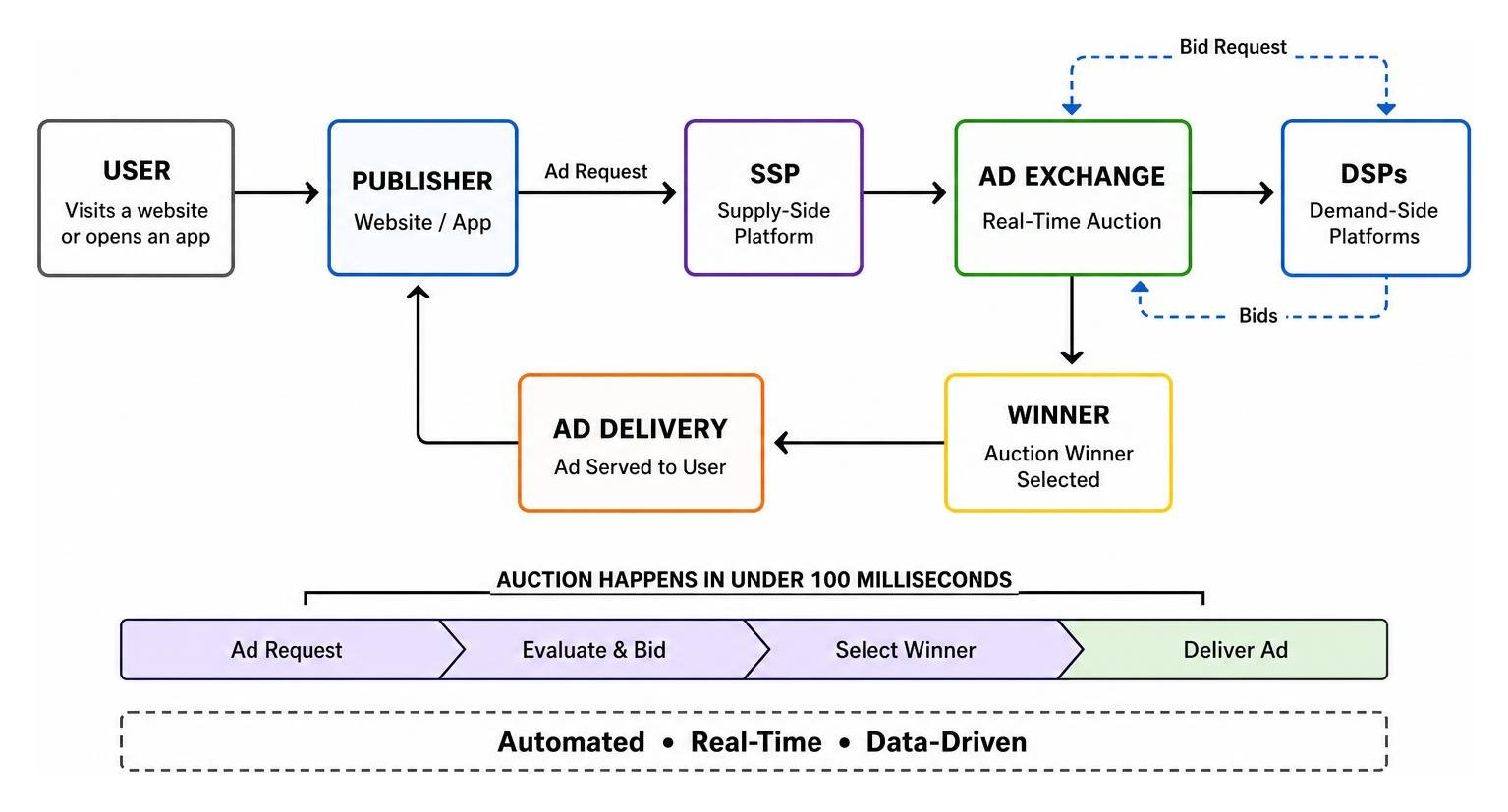
Programmatic digital advertising is the automated buying and selling of digital ad space in real time. Instead of negotiating fixed placements directly with publishers, advertisers use software to evaluate and bid on individual impressions based on audience characteristics, context, and expected performance. When a user visits a webpage or opens an app, an ad request fires. In under 100 milliseconds—faster than the blink of an eye—multiple systems evaluate the user profile against targeting criteria, submit bids, select a winner, and deliver the creative. To maintain high throughput and minimize bid timeouts during these millisecond auctions, ad exchanges and media platforms rely on low-latency RTB infrastructure that routes auction traffic directly across secure private networks rather than congested public routes.
Traditional media buying used to look a lot like booking a hotel room over the phone in 1995. Media planners spent weeks sending insertion orders, emailing back and forth with individual publisher sales reps, negotiating fixed rates, and manually verifying ad placements. It was slow, opaque, and prone to human error. Programmatic advertising turns that slow manual process into an automated, algorithmically driven workflow.
The Core Technology Stack: DSPs, SSPs, and Ad Exchanges
To understand how programmatic digital advertising operates seamlessly across millions of sites simultaneously, it helps to look at the specialized engines powering the ecosystem:
- Demand-Side Platforms (DSPs): The advertiser's command center. DSPs allow media buyers to set parameters, manage creative assets, establish audience targeting rules, and bid across multiple inventory sources from a single interface.
- Supply-Side Platforms (SSPs): The publisher's inventory management tool. SSPs help web and app publishers monetize their digital real estate by exposing their available ad slots to ad exchanges and DSPs at optimal rates.
- Ad Exchanges: The virtual marketplace connecting DSPs and SSPs, hosting the millisecond auctions where impressions are bought and sold.
- Customer Data Platforms (CDPs) and DMPs: The data repositories that organize first-party CRM profiles, online behavior signals, and contextual audiences to inform real-time bidding algorithms.
By connecting these platforms, marketers can focus on audience data and post-click intent rather than manual media negotiations. If you want to see how these automated layers translate into tangible business growth, understanding how it works reveals how data transforms into actual customer conversions.
Key Benefits of Programmatic Digital Advertising for Modern Brands
Why has over 85% of digital advertising spend shifted into programmatic channels? The answer lies in precision, speed, and efficiency:
- Hyper-Targeted Audience Reach: Rather than buying broad placement packages on single media properties, brands purchase access to defined audience segments across thousands of touchpoints.
- Dynamic Creative Optimization (DCO): Ads dynamically adapt copy, imagery, and product offers based on the viewer's location, device, browsing behavior, or time of day.
- Cost and Efficiency Gains: Automating media transactions reduces manual campaign overhead by up to 80% compared to direct publisher negotiations, while real-time optimization consistently outpaces static setups.
- Lower Acquisition Costs: Industry research shows that implementing advanced targeting techniques yields an average 32% improvement in cost per action (CPA).
For an exhaustive framework on building resilient brand equity using automated pipelines, review this comprehensive programmatic brand guidance on organizing, designing, and measuring modern campaigns.
Core Buying Models: From Real-Time Auctions to Guaranteed Deals
Programmatic media buying is not a one-size-fits-all auction. Marketers can choose from four primary transaction models depending on their budget, target audience, brand safety requirements, and desire for guaranteed delivery.
| Buying Model | Pricing Structure | Inventory Access | Placement Guarantee | Typical Use Case |
|---|---|---|---|---|
| Open Auction (RTB) | Dynamic CPM (Bidding) | Public marketplace | No | Broad scale, top-of-funnel reach, cost-effective testing |
| Private Marketplace (PMP) | Dynamic / Floor CPM | Invitation-only | No | Brand-safe environments, publisher vertical targeting |
| Preferred Deals | Fixed CPM | Direct (1:1), unreserved | No (First-look access) | Seasonal campaigns, high-intent retargeting |
| Programmatic Direct / Guaranteed | Fixed CPM | Direct (1:1), reserved | Yes | Homepage takeovers, high-visibility product launches |
Open Auction (RTB) vs. Private Marketplaces (PMP)
Open Auctions (Real-Time Bidding) represent the open digital advertising exchange. Any advertiser using a DSP can bid on available inventory. RTB offers maximum scale at cost-effective rates, with display CPMs starting as low as $2.00. However, open auctions require strict brand-safety parameters and exclusion lists to protect ad placement quality.
Private Marketplaces (PMPs) provide an invitation-only alternative. Publishers offer curated packages of premium inventory to select advertisers via private Deal IDs. While PMP rates typically run about 40% higher than open auction inventory, they provide verified brand safety, transparent placement visibility, and priority access to premium content.
Programmatic Direct and Preferred Deals
For campaigns demanding predictability without sacrificing automated workflow benefits, programmatic direct buying bridges traditional direct contracts and modern automation:
- Programmatic Guaranteed: The buyer and publisher agree on a fixed CPM price and a reserved, guaranteed volume of impressions. The campaign executes programmatically through the DSP/SSP, eliminating manual tags while guaranteeing delivery in premium placements.
- Preferred Deals: The advertiser gets "first look" access to premium inventory at a negotiated fixed CPM before the space opens to auction. The advertiser is not obligated to buy every impression, granting budget flexibility for high-intent segments.
Publishers and advertisers configuring these direct agreements inside ad servers can consult the official guidelines for Programmatic Direct deals to review technical specifications, frequency capping settings, and line-item protections.
Key Formats Across Omnichannel Digital Channels
Today's programmatic landscape spans diverse digital devices and content environments, allowing brands to guide prospects along the entire customer journey.
Display, Video, and Native Formats
Display banners remain a versatile workhorse for retargeting and broad frequency management. However, consumer attention increasingly gravitates toward richer storytelling formats:
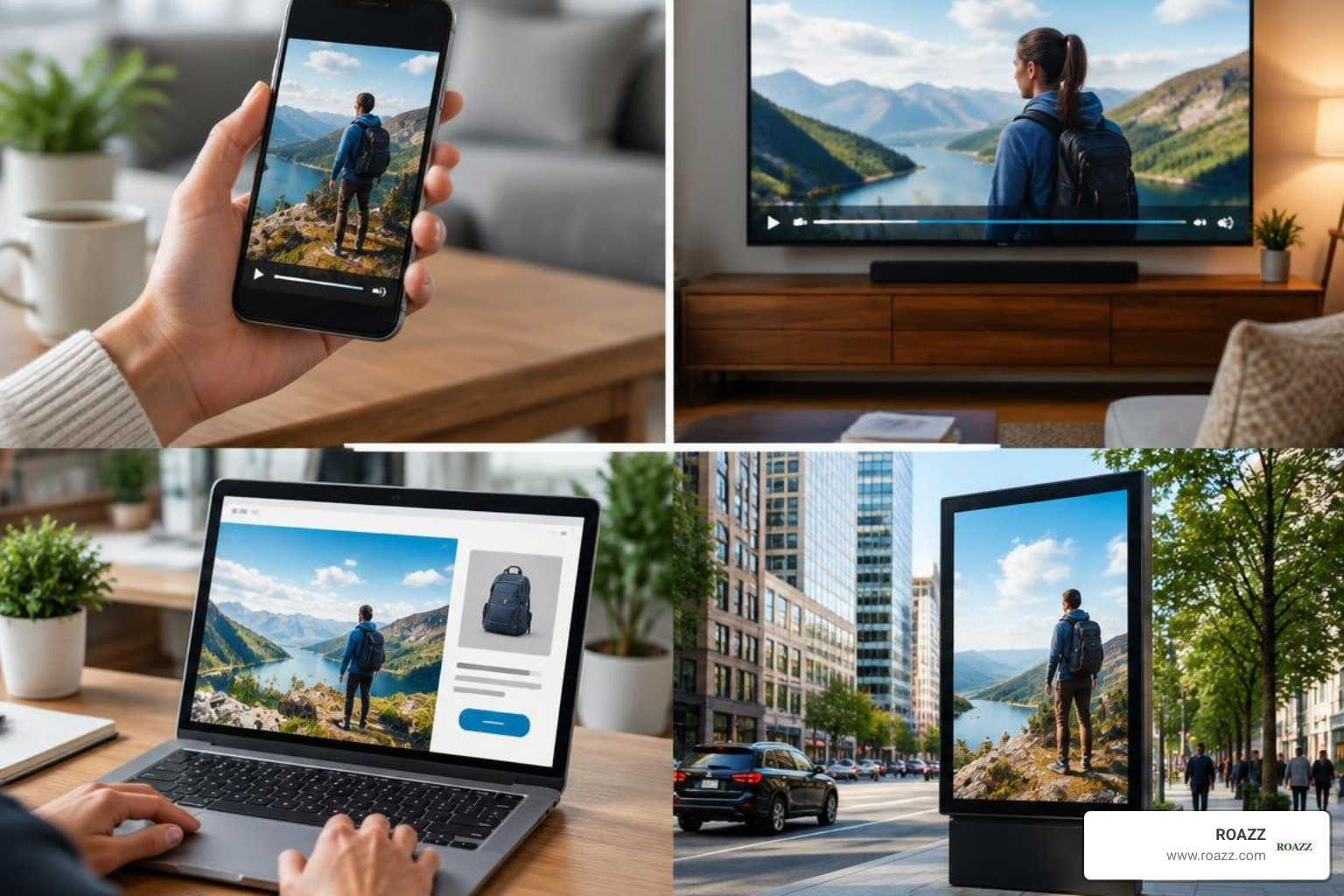
- In-Stream and Out-Stream Video: Video conveys emotion and product value rapidly. Programmatic video can run within video players (in-stream) or seamlessly within text editorial content (out-stream).
- Native Advertising: Matching the visual form and tone of the host publication, native ads receive over 50% more views than standard display banners, making them effective for educational content.
For performance brands operating in direct to consumer markets, pairing native placements with dynamic product ads ensures messaging aligns with intent, driving qualified shopper traffic directly into optimized checkout funnels.
CTV, Digital Audio, and DOOH
Beyond web browsers, programmatic channels now command real-world attention:
- Connected TV (CTV): High-definition streaming environments bring non-skippable, living-room impact to programmatic targeting. Innovations like pause ads capture consumer attention without interrupting content.
- Digital Audio: The programmatic audio market has expanded rapidly past $7 billion, driven by over 751 million monthly active users on Spotify alone. Audio delivers intimate, screen-free engagement during daily commutes, workouts, and cooking.
- Digital Out-of-Home (DOOH): Programmatic digital billboards use real-time triggers (such as weather, foot traffic spikes, or commute hours) to serve dynamic creative.
Local brick-and-mortar operations like restaurants can trigger DOOH lunch specials on digital street kiosks near downtown offices, while nearby medical practices can run programmatic display and audio campaigns targeting patients searching for specialized wellness services within their zip codes.
Strategic Blueprint: Planning, Launching, and Measuring Campaigns
Executing an effective programmatic campaign requires combining audience strategy, brand safety rules, and continuous measurement.
| Funnel Stage | Primary Campaign Objective | Core KPI Focus | Ideal Buying Method & Channel |
|---|---|---|---|
| Top of Funnel (Awareness) | Reach qualified target demographics | Active View Viewability, CPM, Reach | Open Auction / PMP: Video, CTV, Audio |
| Middle of Funnel (Consideration) | Educate prospects and generate interest | Cost Per Click (CPC), Cost Per Completed View | PMP / Preferred Deals: Native, Rich Media |
| Bottom of Funnel (Conversion) | Drive revenue, bookings, and pipeline | Cost Per Action (CPA), Return on Ad Spend (ROAS) | RTB / PMP: Dynamic Display, Retargeting |
Step-by-Step Implementation and Industry Applications
To turn strategy into performance, follow a disciplined four-step implementation process:
- Organize First-Party Data Assets: Audit existing CRM lists, purchase histories, and website event tags. Organize audiences within your CDP to build high-value seed audiences and exclusion lists.
- Define Targeting Parameters and Filters: Select inventory sources, geofencing coordinates, dayparting schedules, and brand-safety verification tiers to filter out low-quality placements.
- Deploy Tailored Multi-Format Creative: Build lightweight HTML5, video, and native creative variations tailored to audience preferences and device specifications.
- Optimize Real-Time Signals: Continuously evaluate placement domain reports, reallocate budget toward top-performing hours and creatives, and enforce frequency caps across channels.

Tailored industry strategies show how adaptable programmatic buying can be:
- Property Development: In real estate, developers combine geofencing with household income targeting to showcase virtual property walk-throughs to qualified buyers.
- Electoral Advocacy: Running political advertising requires voter file matching, fast-turnaround creative testing, and district-level geotargeting.
- Advocacy and Fundraising: For non profits, programmatic channels enable donor retargeting and seasonal giving campaigns across digital audio and display to maximize gift contributions.
Essential Metrics for Evaluating Programmatic Digital Advertising ROI
Impressions and raw clicks are vanity metrics if they do not lead to qualified business actions. Measuring programmatic success requires evaluating performance at every stage:
- Active View Viewability: Industry audits reveal that 56.1% of all digital display impressions are never seen due to below-the-fold placement or quick scrolling. High-performing campaigns actively optimize for viewability thresholds above 70%.
- Brand Lift and Message Recall: Using controlled survey groups to quantify how programmatic CTV and video elevate brand awareness.
- Post-Click Outcome Attribution: Tracking post-click conversions, such as demo bookings, lead submissions, phone inquiries, and completed checkouts.
- Cost Per Action (CPA) and ROAS: Measuring total media spend against confirmed backend transactions to confirm marketing efficiency.
Frequently Asked Questions
What is the difference between programmatic advertising and search advertising?
Search advertising is a "pull" channel: it serves ads when users actively type a query into a search engine, capturing existing commercial intent. Programmatic advertising is a "push" channel: it identifies and reaches prospects as they consume content across web pages, mobile apps, streaming television, podcasts, and digital billboards. Combining both channels creates a comprehensive full-funnel strategy.
How much budget is needed to get started with programmatic buying?
Advertisers can begin testing programmatic Open Auction campaigns with modest experimental budgets ($2,000 to $5,000 monthly) to gather baseline conversion data and test audience segments. Once winning creatives and responsive audiences are identified, budgets can scale into Private Marketplaces and direct programmatic sponsorships with predictable unit economics.
How do privacy shifts in 2026 impact audience targeting?
The ongoing decline of third-party cookies and heightened consumer privacy regulations have made first-party CRM data, server-side tracking, and contextual targeting fundamental. Instead of tracking individuals across the web, modern programmatic platforms leverage machine learning and privacy-safe data clean rooms to model high-intent audience lookalikes.
Conclusion
Automated media execution has permanently transformed modern marketing. By leveraging millisecond auctions, omnichannel formats, and real-time optimization, brands can reach their ideal audiences with pinpoint accuracy.
However, technology alone does not produce revenue. Real marketing success comes from connecting automated media buying to genuine post-click business outcomes—whether that means closed sales, scheduled consultations, or recurring subscriptions. If you are ready to move beyond vanity metrics and scale measurable conversions, partner with our performance-driven media services to plan, execute, and optimize programmatic campaigns built for real business growth.