The Modern Playbook and Guide to PPC Lead Generation Agencies

How to Choose a PPC Lead Generation Agency
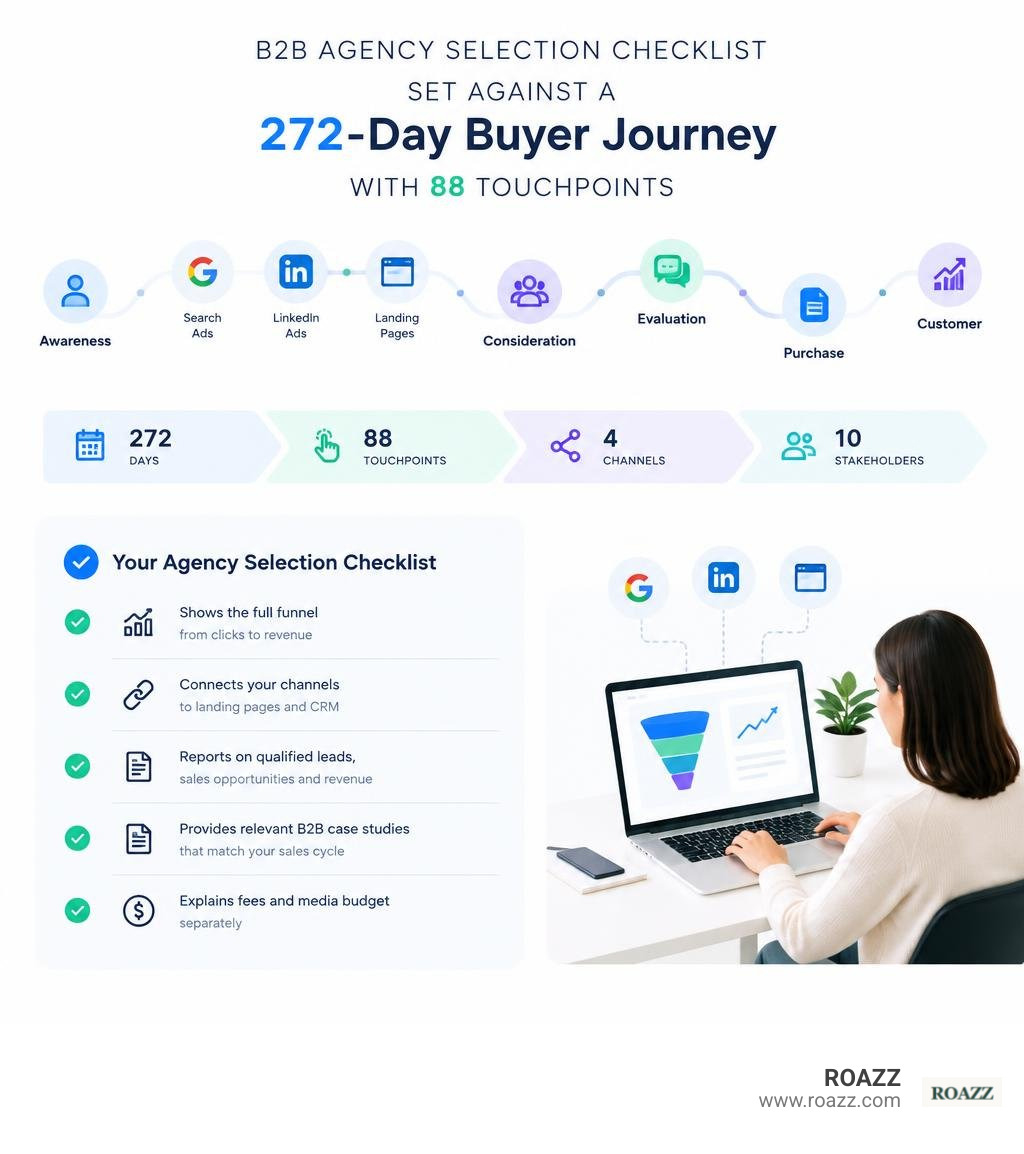
Hire a PPC lead generation agency that can show what happens after someone clicks. Ask how it connects Google Ads, LinkedIn Ads, and landing pages to your CRM. Look for reports on qualified leads, sales opportunities, and revenue, not just traffic or form fills. Request B2B case studies that match your sales cycle, and make sure the agency can explain its fees and media budget separately.
That matters when buyers take months to decide and interact with your brand across several channels. This guide will help you compare agencies, plan a budget, and set clear goals for the first 90 days. For a broader view of how paid media fits into demand generation, the pay-per-click model is a useful starting point.
Why Partnering with a PPC Lead Generation Agency Drives Predictable Pipeline

Traditional ad management often obsesses over surface-level metrics. It is easy to celebrate high click-through rates (CTR) or low costs per click (CPC), but your finance team cannot deposit clicks into the bank. In modern B2B marketing, the average customer journey has stretched to roughly 272 days. That buyer path now involves an average of 88 distinct touchpoints across 4 separate channels and touches up to 10 distinct internal stakeholders.
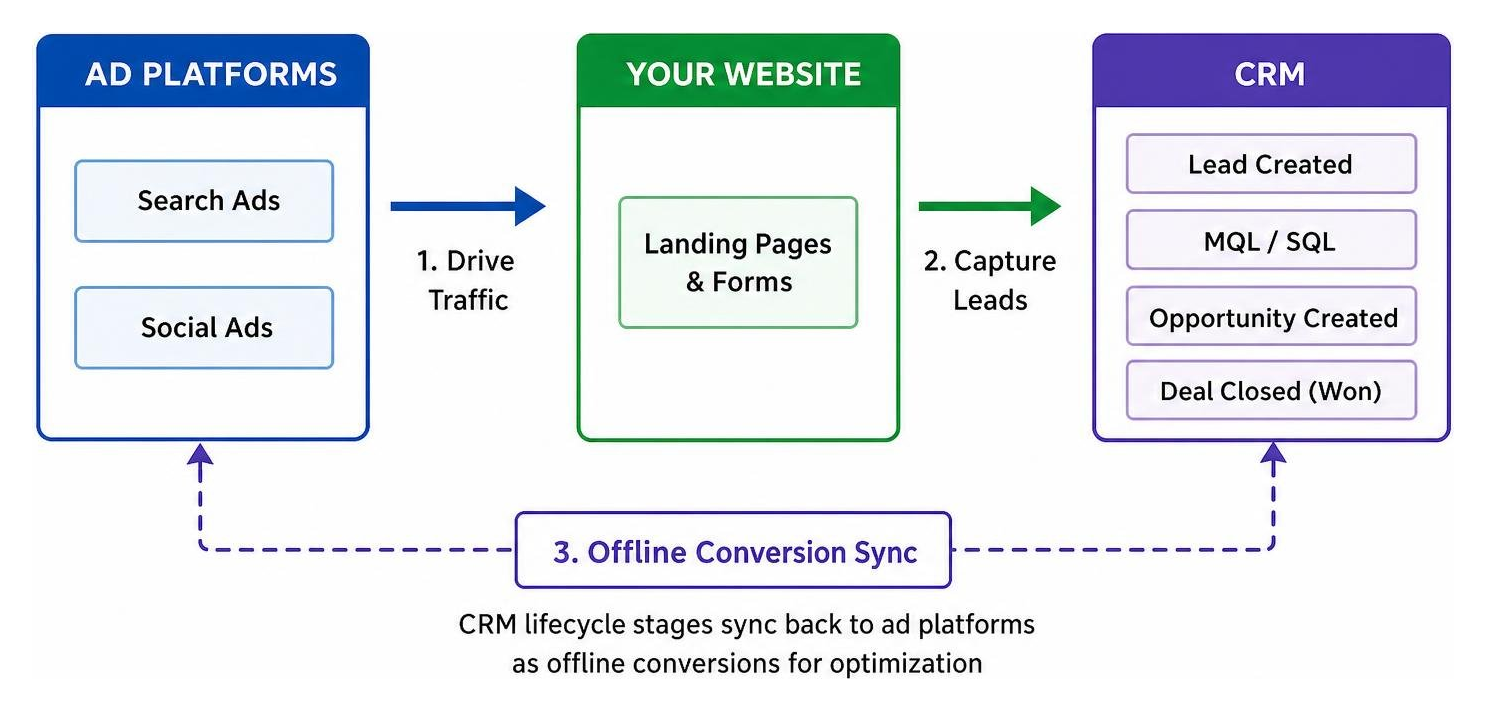
When you partner with a specialized paid media partner, the focus shifts from raw traffic to revenue attribution, sales cycle velocity, and sustainable customer acquisition cost (CAC). We structure our services to track every interaction beyond the landing page, connecting campaign data with offline conversion tracking so ad spend actively fuels closed-won deals.
What Differentiates a Specialist PPC Lead Generation Agency from a Generalist Firm?
A generalist agency typically manages digital ads for anything from local retail shops to direct-to-consumer e-commerce brands. In those environments, standard conversions happen in minutes inside a single browser session.
B2B lead generation operates on an entirely different plane. The gap between a raw Marketing Qualified Lead (MQL) and a revenue-generating Sales Qualified Lead (SQL) is massive. Generalists frequently flood your CRM with junk form fills to hit arbitrary lead volume targets. A dedicated B2B partner builds closed-loop reporting mechanisms that optimize for actual qualification criteria, pipeline value, and account fit.
| Dimension | Generalist Ad Agency | Specialist PPC Lead Gen Agency |
|---|---|---|
| Primary Metric | Clicks, CTR, Impressions, Raw Leads | SQLs, Opportunities, Pipeline, Revenue |
| Data Integration | Basic web pixel tracking | Bi-directional CRM & offline conversion sync |
| Audience Strategy | Broad interest & demographic targets | Account-Based Marketing (ABM) & buying committee matching |
| Optimization Focus | Front-end Cost Per Lead (CPL) | Customer Lifetime Value (LTV) & Cost Per Opportunity |
| Attribution Window | Default 7- to 30-day click models | 90- to 365-day multi-touch multi-stakeholder models |
Core Capabilities Every PPC Lead Generation Agency Must Master
To succeed in today's ad landscape, a modern ppc lead generation agency must master sophisticated technical and tactical capabilities:
- Offline Conversion Tracking (OCT): Synchronizing CRM lifecycle stages (demo held, opportunity created, deal closed) back into Google Ads and LinkedIn so machine learning algorithms bid on real revenue events rather than spam submissions.
- First-Party Data Strategy: Safely segmenting customer and target account lists to build high-converting exclusion audiences, customer match lists, and lookalike models.
- Performance Max Optimization for B2B: Directing automated Google campaigns with stringent negative keyword lists, tight audience signals, and value-based bidding to prevent budget waste.
- Conversion Rate Optimization (CRO) & Dedicated Landing Pages: Designing bespoke post-click journeys, interactive product tours, and friction-free booking flows that convert high-intent prospects into confirmed calendar appointments.
The Modern Multi-Channel B2B Paid Media Channel Mix

Relying on a single advertising network is no longer sufficient. Winning B2B teams use an orchestration model that blends intent capture with demand generation. Understanding How It Works across diverse channels allows businesses to guide entire buying committees through complex evaluations without losing momentum.
Paid Search and Intent Capture in High-CPC Verticals
Google Search remains the bedrock of high-intent capture. When a prospect searches for enterprise software or complex commercial services, they are actively looking for solutions. However, in competitive verticals such as cybersecurity, fintech, and developer tools, CPCs routinely sit between $15 and $50+ per click.
In these environments, careless broad match bidding can quickly deplete a budget. Managing these campaigns requires strict negative keyword governance, dedicated single-topic ad groups, and exact-match bidding on high-intent commercial terms. The goal is simple: capture prospects who are already at the bottom of the funnel without paying for casual informational queries.
LinkedIn Ads and Account-Based Demand Generation
While search captures active demand, paid social creates it. LinkedIn Ads have transformed into a primary performance engine for B2B companies. When measured over 180-to-365-day sales cycles, LinkedIn Ads deliver a 121% Return on Ad Spend (ROAS), outpacing Google search (67%) and Meta (51%).
Furthermore, LinkedIn now directly influences 28.3% of new business deals at the closed-won stage. By leveraging Account-Based Marketing (ABM), matched audience lists, and demographic filters (job function, seniority, company size), we put compelling messaging directly in front of executive decision-makers before they even start searching.
Programmatic, Retargeting, and Video for Complex Buying Committees
With up to 10 stakeholders involved in a single enterprise purchase, winning over just one manager is rarely enough. A full-funnel strategy incorporates targeted programmatic display, selective Connected TV (CTV), and personalized retargeting sequences across platforms like YouTube.
By delivering tailored messaging to engineers, finance leads, and executive sponsors simultaneously, we keep your brand top-of-mind across the entire organization throughout their 272-day research process.
Understanding PPC Lead Generation Pricing and Media Spend Models
Agency pricing models vary based on company size, complexity, and campaign scope. When evaluating proposals, demand complete transparency between management fees and actual media spend paid directly to ad platforms.
| Market Tier | Monthly Retainer Range | Typical Service Scope | Recommended Monthly Media Spend |
|---|---|---|---|
| Boutique / Growth | $7,000 – $14,000 | Single-channel focus (e.g., Google Search), landing page iteration, core CRM tracking | $35,000 – $70,000+ |
| Mid-Market Multi-Channel | $15,000 – $25,000 | Multi-channel management (Google, LinkedIn, Meta), CRO, advanced pipeline attribution | $75,000 – $150,000+ |
| Enterprise ABM & Global | $25,000+ | Full ABM execution, global GTM coverage, CTV/programmatic, bespoke BI data pipelines | $150,000 – $300,000+ |
Retainer Structures Across Market Tiers
Most professional agencies operate on either a fixed monthly retainer, a base fee plus a percentage of ad spend (typically 10-15% above a specific spend threshold), or a hybrid performance model tied to pipeline milestones.
Avoid pure pay-per-lead (CPL) models that lack strict qualification rules. These setups incentivize vendors to deliver large quantities of low-intent contact details that drain your sales team's energy without generating closed deals.
Establishing Minimum Media Spend and Budget Ratios
A standard rule of thumb in performance marketing is that your monthly media spend should equal at least 5x to 8x your agency management fee.
If you pay an agency $10,000 a month to manage a $5,000 media budget, the agency's fees consume too much of your total investment. That dynamic makes achieving a healthy blended customer acquisition cost mathematically difficult. Ensure your media budget is large enough to generate meaningful statistical volume across your active channels.
How to Evaluate Agency Performance and Pipeline Attribution
Selecting an agency requires evaluating how they measure and report results. Learning more About Us highlights our core principle: every marketing dollar should connect directly to real pipeline progression.
Essential Questions for the First 90 Days
During the first quarter of working together, ask your agency partner these critical operational questions:
- How is our CRM integrated with your ad platforms to report on MQL-to-SQL conversion rates?
- What mechanisms are in place to ensure automated bidding models optimize for qualified meetings rather than generic form fills?
- How are you segmenting brand search queries from non-brand search queries to show true incrementality?
- Which specific target accounts from our ABM list engaged with our LinkedIn campaigns this month?
- What conversion rate optimization tests are planned for our core landing pages over the next 30 days?
Key Performance Metrics That Matter

Ditch vanity metrics and hold your campaigns accountable to these pipeline indicators:
- Cost Per Sales Qualified Lead (Cost/SQL): The total media and management cost required to generate a fully vetted, sales-accepted prospect.
- Pipeline Velocity: The speed at which ad-influenced opportunities progress through your sales stages.
- Demo / Consultation Show-Up Rate: The percentage of prospects who book an appointment via paid channels and actually attend the call.
- Stage-by-Stage ROAS: Revenue return evaluated across extended attribution windows (90, 180, and 365 days) rather than standard 30-day post-click windows.
Frequently Asked Questions About PPC Lead Generation
Can AI tools replace a dedicated paid media agency?
AI tools and automated bidding features are powerful, but they are execution engines, not strategists. Machine learning models require clean data inputs to work properly. Without strategic direction, business context, customized creative angles, and rigorous offline conversion tracking, AI often bids aggressively on irrelevant queries just to generate cheap, unqualified conversions. A skilled team guides these tools, ensures message-market fit, and connects advertising spend to bottom-line business objectives.
What does Google Premier Partner status actually signify?
Google Premier Partner status indicates that an agency ranks in the top 3% of participating agencies in its region. It confirms that the agency manages substantial ad spend, meets strict performance and client growth benchmarks, and holds advanced product certifications. For buyers, it signals technical capability and gives the agency direct access to specialized platform support and beta features.
Should B2B brands choose a specialist or full-service digital agency?
If your main goal is building a predictable B2B pipeline, a specialized performance agency is usually the better fit. Specialist agencies have deep experience managing extended buyer journeys, long sales cycles, complex CRM integrations, and ABM targeting. Full-service agencies offer broad capabilities like public relations, organic social content, or brand design, but they often lack the technical rigor needed to optimize paid media for complex, long-cycle business purchases.
Conclusion
Maximizing return on ad spend requires shifting focus from surface-level clicks to post-click business outcomes. By combining high-intent search capture, precise ABM distribution, and closed-loop CRM attribution, you can turn your advertising spend into a reliable pipeline engine.
Ready to build a predictable, revenue-focused acquisition system? Reach out via our contact page to start the conversation, or review our full suite of services to see how we help businesses grow.