Location Based Digital Advertising: Beyond the Typical Radius Targeting
Geofencing Digital Advertising: Reach People in the Right Places
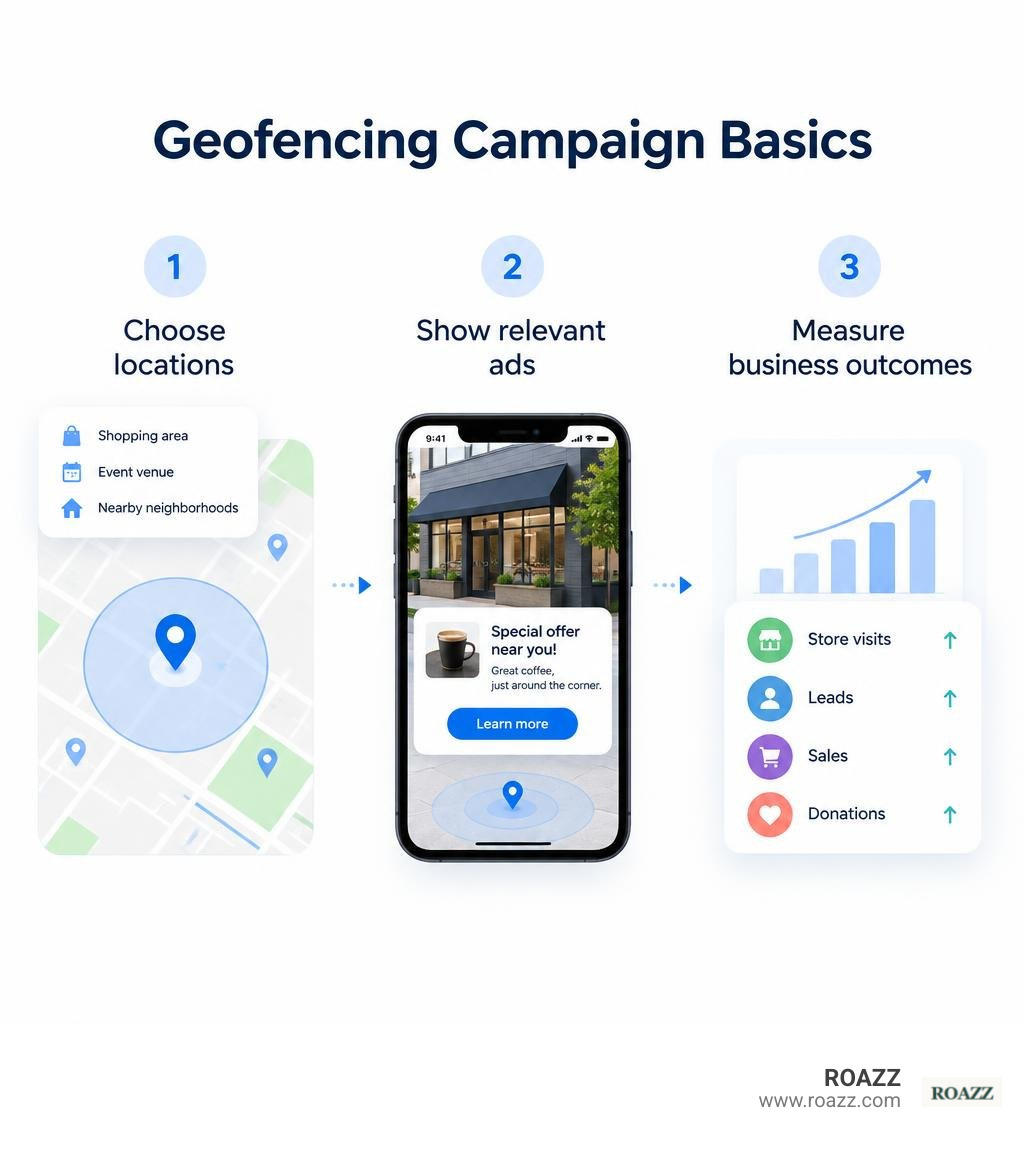
Geofencing digital advertising helps you reach people in locations that matter to your business. Start by choosing places your likely customers visit, then show a relevant ad and measure what happens next. That could mean a store visit, a lead, a sale, or a donation.
The key is to look beyond a circle around your address. A useful campaign might focus on a shopping area, an event venue, or nearby neighborhoods. Set a clear goal, choose a boundary your ad platform supports, and test whether those ads produce better results than broader targeting.
Location-based campaigns work because they connect digital messaging to physical context. When someone enters a defined area, the ad they see can reflect the storefront, venue, or district they are already near. This reduces wasted impressions and helps performance marketers tie spend to measurable actions such as walk-ins, calls, and completed transactions. For businesses that depend on local foot traffic, geofencing digital advertising turns proximity into a competitive advantage.
Fundamentals of Geofencing Digital Advertising for Small Businesses
Geofencing establishes a virtual boundary around a physical location using digital mapping tools. When a mobile user carrying a location-enabled smartphone steps across that boundary, specific ad delivery triggers fire. Rather than showing ads across an entire media market, we target devices within defined geographic coordinates.
Mobile adoption makes this strategy essential. In the United States, 77% of consumers own a smartphone, spending an average of two hours per day inside mobile applications. When ads reach these users based on where they stand, engagement increases significantly. Geofenced campaigns typically achieve double the click-through rates of non-location-based campaigns.
| Feature | Standard Radius Targeting | Custom Polygonal Geofencing |
|---|---|---|
| Boundary Shape | Circular radius (e.g., 1–5 miles) | Precise polygon drawn around building contours or parcels |
| Precision | Broad area; captures irrelevant surrounding spaces | Exact footprint; excludes adjacent highways, rivers, or non-target zones |
| Audience Intent | General local presence | High context (e.g., attending a trade show, visiting a shopping district) |
| Wasted Ad Spend | Moderate to high due to spillover | Minimal; bids focus entirely on high-intent real estate |
| Attribution | Broad zip code or regional modeling | Precise physical footfall tracking via conversion zones |
Why Hyper-Local Targeting Outperforms Traditional Broad Reach
Traditional banner ads cast a wide net, hoping someone in the broader market finds the message relevant. In contrast, location-based advertising delivers up to 20 times the returns of traditional banner campaigns because it aligns the message with immediate physical context.

When a consumer walks down a commercial street, relevance dictates action. Research shows that 57% of consumers have visited a physical storefront specifically after receiving a targeted mobile promotion while in the immediate vicinity. Hyper-local delivery capitalizes on impulse visits, accelerating footfall velocity and maximizing return on ad spend.
For small businesses, this approach is especially valuable because budgets are limited and every dollar must work harder. Instead of paying for impressions that may never convert, geofencing digital advertising focuses spend on the people most likely to act. A restaurant can target office workers during lunch hours, a boutique can reach shoppers near competing stores, and a service provider can connect with homeowners in specific neighborhoods. The result is a more efficient use of ad budgets and a clearer path from exposure to purchase.
Mechanics of GPS, RFID, and Indoor Proximity Signals
Location-aware marketing relies on several core positioning technologies:
- Global Positioning System (GPS): Relies on satellite triangulation to pinpoint outdoor coordinates within a few meters. It works best for outdoor perimeters, retail parking lots, and neighborhood districts.
- Wi-Fi Triangulation: Determines location based on nearby wireless network signals. This method provides strong indoor accuracy where GPS signals degrade.
- Bluetooth Low Energy (BLE) Beacons: Small hardware transmitters placed inside physical spaces. Beacons broadcast signals directly to nearby devices, offering micro-proximity detection down to specific store aisles.
- Radio-Frequency Identification (RFID): Tracks tagged assets or localized interactions, supporting specialized logistics and indoor trigger points.
Each technology has strengths and limitations. GPS offers broad outdoor coverage but struggles inside buildings. Wi-Fi triangulation fills that gap by using existing network infrastructure. BLE beacons provide the finest indoor precision but require hardware installation. RFID supports specialized use cases such as inventory tracking and event check-ins. Successful campaigns often combine multiple signals to maintain accuracy as users move between outdoor and indoor environments.
Step-by-Step Blueprint for Advanced Location Targeting
Executing a precise campaign requires a structured deployment framework:
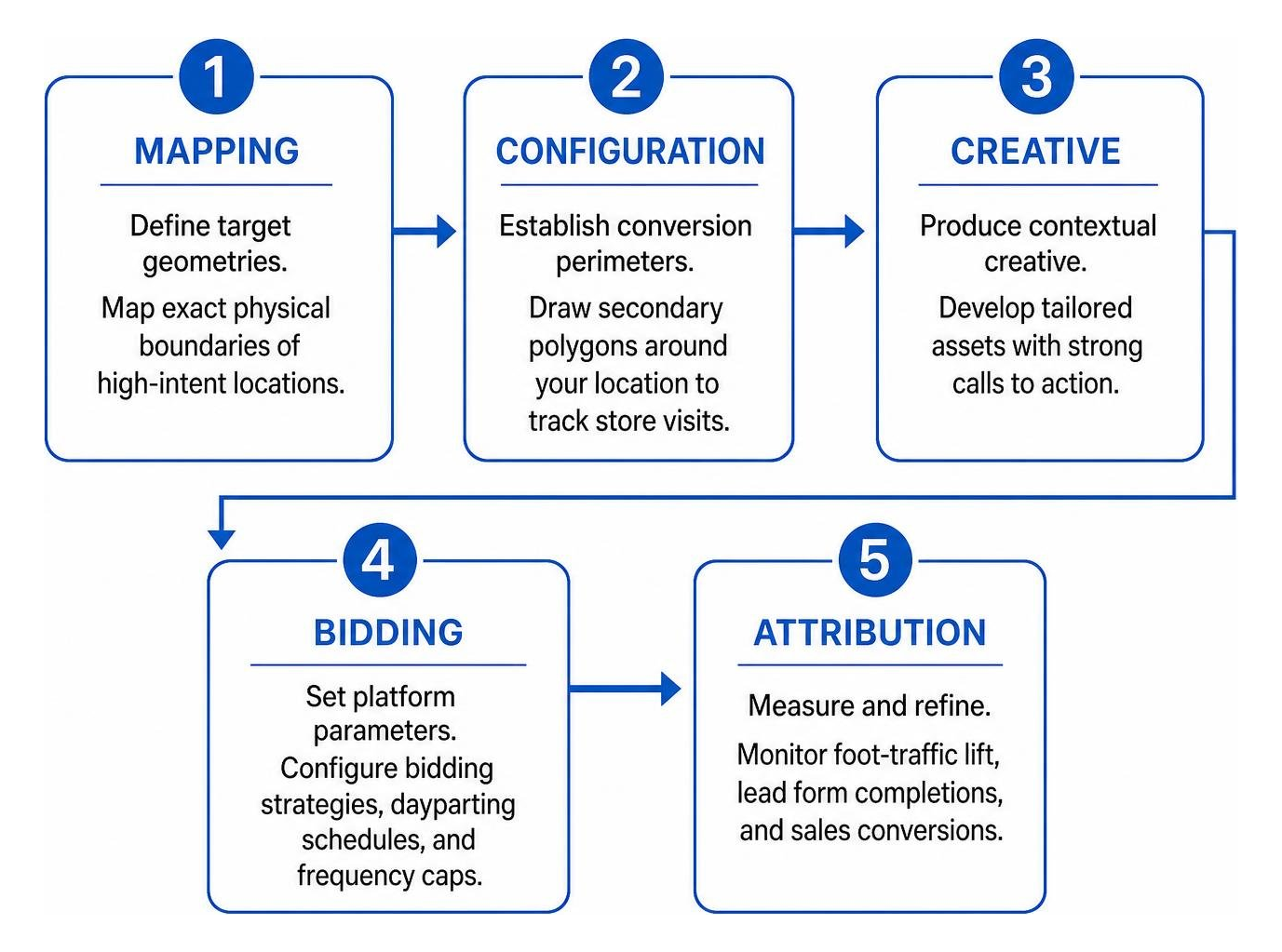
- Define Target Geometries: Map the exact physical boundaries of high-intent physical locations.
- Establish Conversion Perimeters: Draw secondary polygons around your business location to track store visits.
- Produce Contextual Creative: Develop tailored creative assets with strong calls to action reflecting the user's current environment.
- Set Platform Parameters: Configure bidding strategies, dayparting schedules, and frequency caps.
- Measure and Refine: Monitor physical foot-traffic lift, lead form completions, and sales conversions.
Setting Up Your Geofencing Digital Advertising Infrastructure
Platform configurations vary depending on campaign architecture. When setting up search and display networks, you can target ads to geographic locations by selecting specific coordinates, postal regions, or radii around commercial hubs.
We build our campaigns around intent-driven actions rather than vanity impressions. By learning how location-based performance marketing works, advertisers can align ad budgets with measurable business outcomes like appointments, walk-ins, and direct sales.
A strong infrastructure also requires clear audience segmentation. Group your target locations by customer intent, time of day, and expected behavior. For example, a morning coffee shop campaign may target commuter routes, while an evening campaign focuses on residential areas. Creative A/B testing helps identify which messages resonate in each context. Test different headlines, offers, and calls to action, then allocate more budget to the variations that drive the highest conversion rates.
Defining Conversion Zones and Measuring Foot-Traffic Attribution
Tracking impressions alone does not prove commercial success. Advanced campaigns use conversion zones—virtual boundaries drawn around your storefront or office interior.
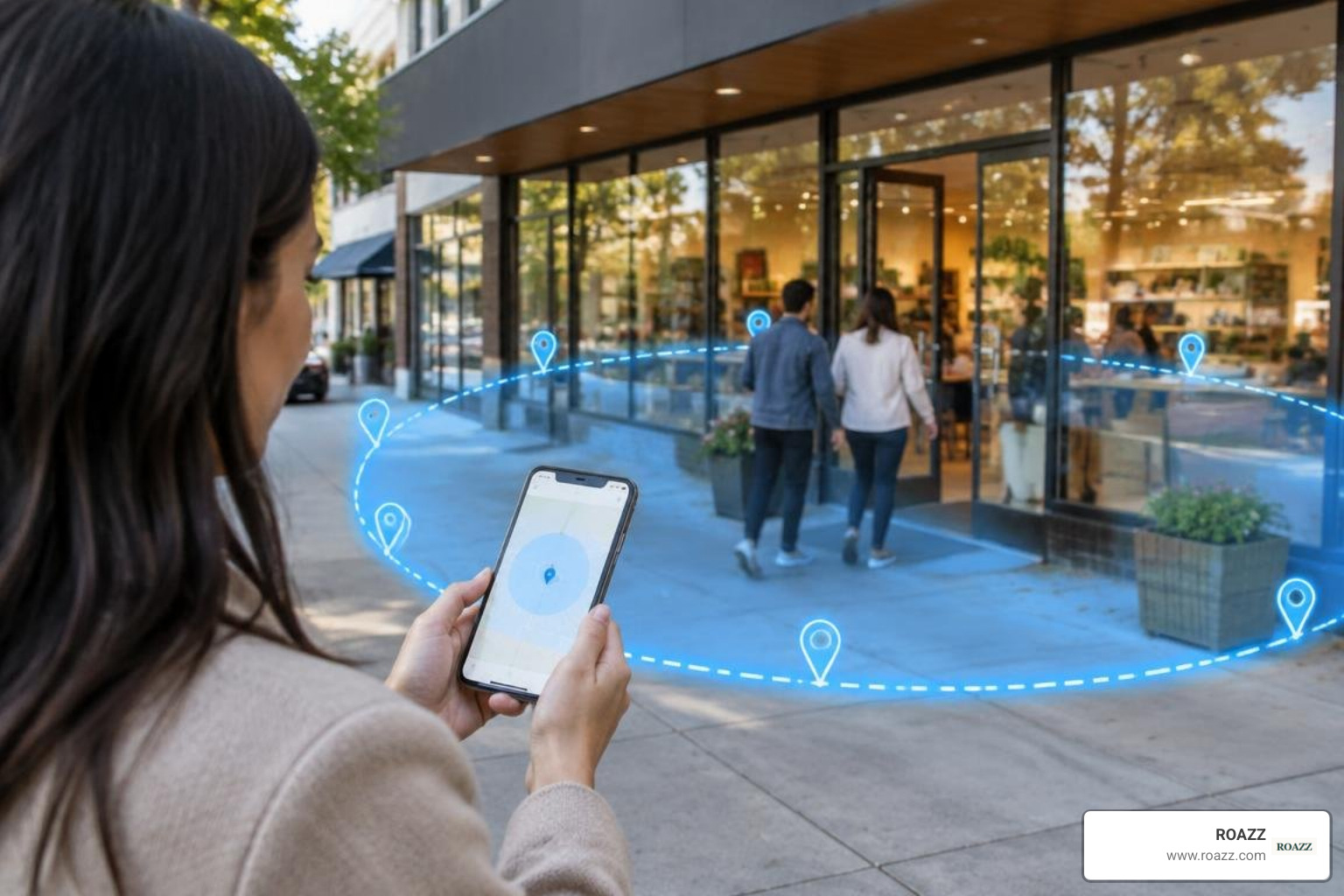
When a user receives an ad within a target zone and later walks into your conversion zone, the platform matches the mobile device identifier. This allows us to calculate cost per walk-in, conversion lift against unexposed control groups, and true return on investment.
Foot-traffic attribution closes the loop between digital advertising and physical outcomes. Without it, marketers cannot know whether a geofenced campaign actually drove store visits or simply generated impressions. By comparing exposed and unexposed groups, you can isolate the incremental impact of your ads. This data then informs future budget decisions, creative adjustments, and boundary refinements.
Cross-Channel Tactics and Vertical Playbooks
Location triggers gain strength when combined with omnichannel retargeting and cross-channel marketing strategies.
Scaling Geofencing Digital Advertising Across Industry Verticals
Different business models benefit from tailored perimeter strategies:
- Hospitality and Dining: Launch timed happy-hour promotions for restaurants targeting nearby office parks and commercial plazas.
- Property Marketing: Run hyper-local open-house campaigns for Real Estate developments, capturing prospective buyers visiting adjacent neighborhoods.
- Healthcare Providers: Establish geographic awareness for specialized medical practices near relevant community centers and wellness districts.
- Community Advocacy: Drive event attendance and donor activations for regional non-profits.
- Civic Campaigns: Deploy district-level voter outreach through tailored political advertising boundaries.
- Retail & E-Commerce: Re-engage shoppers near competing storefronts through geo-retargeting for direct to consumer brands.
Each vertical requires a different approach to boundary selection, creative messaging, and conversion tracking. A restaurant may prioritize lunch and dinner dayparts, while a real estate agent focuses on weekend open houses. Medical practices often target areas near gyms, pharmacies, and community centers where health-conscious consumers gather. Non-profits can geofence event venues to capture attendees who are already engaged with a cause. Political campaigns use district-level boundaries to reach voters with location-specific messaging. Direct-to-consumer brands can target shoppers near competitor storefronts to intercept purchase intent.
Combining Location Signals with CRM Data, Loyalty Programs, and Reviews
Customer trust heavily influences conversion behavior. Data shows 92% of consumers trust earned media and personal recommendations, while 88% read online reviews about local businesses. Furthermore, 72% state that positive reviews directly establish brand trust.
Integrating location triggers with existing CRM data and automated review generation strengthens the funnel. When a customer enters a geofence, dynamic creative can present verified local testimonials, current loyalty program point balances, or exclusive rewards to encourage immediate conversion.
This integration also enables more sophisticated retargeting. A customer who visited your store last month can receive a different message than a first-time visitor. Loyalty members can see personalized offers based on their purchase history. Customers who left positive reviews can be invited to refer friends. By combining location signals with first-party data, you create a more relevant and effective advertising experience.
Technical Hurdles, Privacy Boundaries, and Future Projections
Operating sophisticated location campaigns requires balancing granular targeting with consumer privacy rules and network platform policies.
Overcoming Small-Radius Restrictions and Adherence to Privacy Standards
Major ad networks enforce strict privacy thresholds to prevent individual tracking. For instance, standard radius targeting tools often require a minimum radius of 1 kilometer to protect consumer anonymity. Setting targets below platform density requirements can cause ads to serve intermittently or fail delivery checks.
To balance privacy compliance with precision:
- Use programmatic geofencing platforms that utilize anonymized, consent-based mobile advertising IDs (MAIDs).
- Combine physical presence signals with contextual interest parameters.
- Group smaller physical locations into unified target clusters to maintain necessary audience volume.
Privacy regulations such as GDPR and CCPA require clear consent for location data collection. Advertisers must ensure their geofencing partners comply with these standards. Anonymized data aggregation helps protect individual privacy while still enabling effective targeting. By working with reputable platforms and maintaining transparent data practices, businesses can run geofencing digital advertising campaigns that respect consumer rights and deliver strong results.
The 2026 to 2030 Market Evolution: Non-GPS Tech and Omnichannel Maturation
The global market for location-based marketing technology is projected to grow from $1.2 billion in 2023 to $4.5 billion by 2030, representing an annual growth rate of 24.1%.
This expansion is fueled by advances in indoor positioning, AI-managed real-time bidding, and seamless attribution across mobile, desktop, and connected TV devices. As indoor mapping improves, advertisers will gain the ability to target consumers in malls, airports, stadiums, and office buildings with greater precision. AI automation will optimize bids and creative in real time based on location signals and conversion data. Omnichannel maturation will connect mobile geofencing with desktop retargeting and connected TV ads, creating a unified view of the customer journey.
Frequently Asked Questions About Location-Based Campaigns
Explore common questions regarding local targeting below, or check our complete list of frequently asked questions.
How does geofencing differ from standard radius geo-targeting?
Standard radius targeting applies a circular perimeter around a central point, often capturing unwanted areas. Geofencing allows marketers to draw precise custom polygons around buildings, campuses, or event grounds, serving ads based on real-time boundary crossings.
What is the minimum radius required for effective location targeting?
Platform limits vary. Major search and social networks typically enforce a minimum radius of 1 kilometer (approximately 0.62 miles) to preserve user privacy. Programmatic ad platforms can target specific property boundaries provided audience density thresholds are met.
How do marketers track real-world conversions and foot traffic from geofenced ads?
Foot-traffic attribution uses conversion zones. When a device served an impression inside an active geofence subsequently enters the conversion boundary around your store, the interaction is recorded as a physical visit, establishing clear cost-per-visit metrics.
What types of businesses benefit most from geofencing digital advertising?
Businesses that depend on physical foot traffic see the strongest results. Restaurants, retail stores, medical practices, real estate agents, event venues, and service providers can all use geofencing to reach nearby consumers at the moment they are most likely to act. The key is having a clear conversion goal and a physical location where that conversion can occur.
Conclusion
Maximizing ad budgets requires moving past basic regional blasts. By combining precise boundaries, compelling creative, and rigorous foot-traffic attribution, businesses can turn physical proximity into measurable revenue. Discover how our performance-focused services can optimize your campaigns for verified sales, appointments, and bottom-line growth.
Geofencing digital advertising represents a fundamental shift in how local businesses approach customer acquisition. Instead of hoping that broad reach eventually finds the right person, location-based campaigns deliver relevant messages to consumers who are already near your business and ready to act. The result is higher engagement, lower wasted spend, and a clearer connection between advertising investment and real-world outcomes. As mobile adoption continues to grow and location technology becomes more sophisticated, businesses that master geofencing will gain a lasting competitive advantage in their local markets.