How to Use B2B Geofencing Advertising at Industry Events
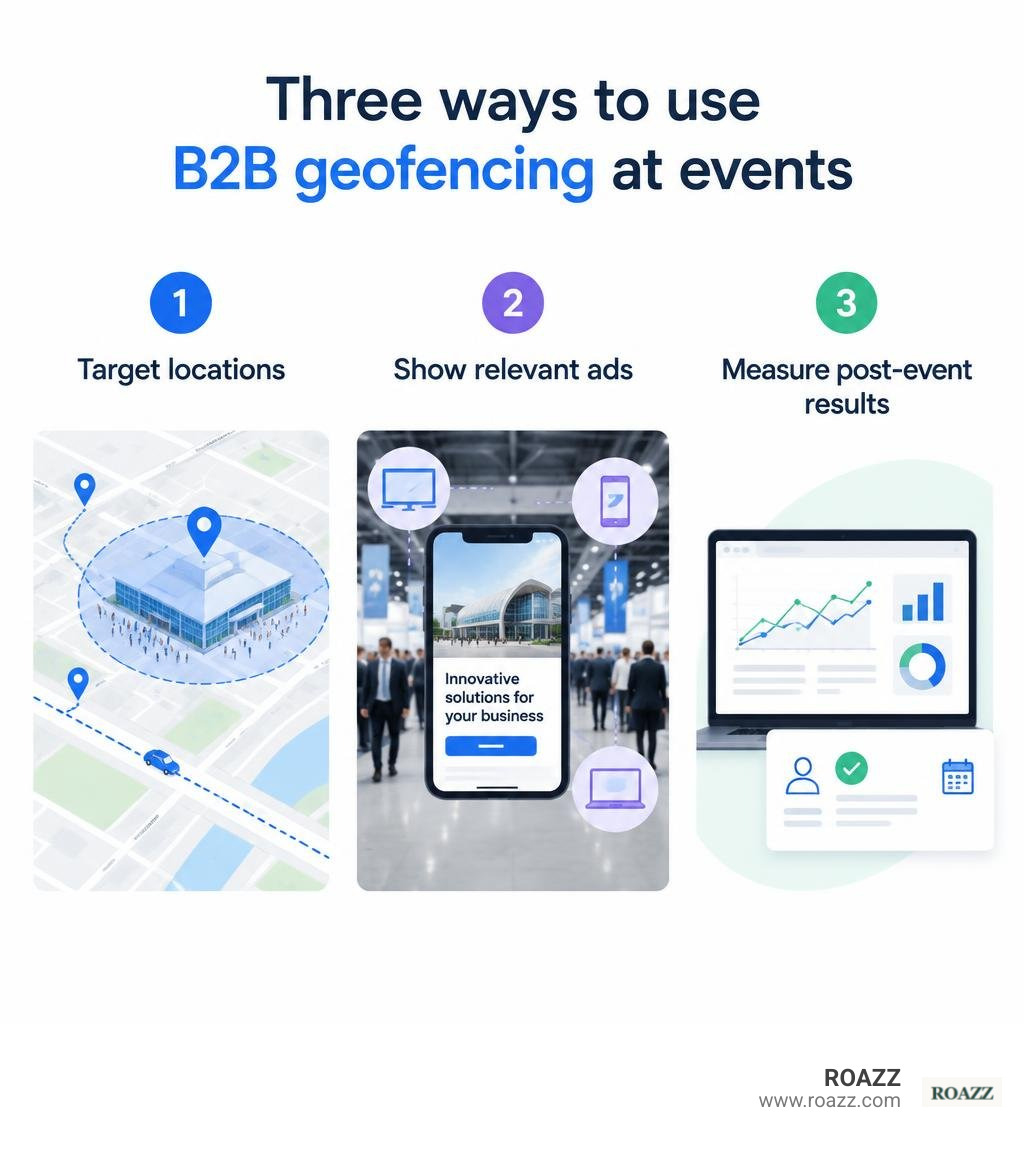
To use b2b geofencing advertising, draw a virtual boundary around an industry event and show ads to eligible devices detected there. Start with three moves: target the venue and nearby travel routes, use event-specific ads across available screens, then retarget eligible visitors with a demo or meeting offer after the event.
An event presence does not prove someone is a decision-maker. Pair location targeting with your target account list, where possible, and judge the campaign by qualified conversations and sales, not just clicks.
Understanding B2B Geofencing Advertising vs. Traditional Geotargeting
To get the most out of location-based marketing, it helps to distinguish precision geofencing from standard geotargeting. Standard geotargeting casts a broad net across entire cities, designated market areas (DMAs), or zip codes. If you run ads across an entire metro area during an expo, you end up paying for impressions served to local residents, tourists, and students who have zero interest in your enterprise software or industrial hardware.
In contrast, geofencing digital advertising constructs custom virtual perimeters—known as precision polygons—around exact physical footprints. Instead of targeting a 10-mile radius, we trace the exact property lines of an expo hall, a high-end business hotel, or specific corporate headquarters.
| Feature | Standard Geotargeting | IP-Based Targeting | B2B Geofencing |
|---|---|---|---|
| Location Precision | City, zip code, or broad radius (1–10 miles) | Corporate network IP address ranges | Exact building-level polygon (down to feet/meters) |
| Primary Data Source | Cell tower triangulation & ISP registration | Dynamic/static IP registries | Real-time GPS, Wi-Fi, and Bluetooth signals |
| Device Identifier | Broad browser cookies & network sessions | Network router / subnet IDs | Mobile Advertising IDs (MAIDs) & device graphs |
| Wasted Ad Spend | High (captures irrelevant local consumer traffic) | Moderate (diluted by remote VPNs and dynamic IPs) | Minimal (targets verified physical attendees) |
| Post-Event Retargeting | Limited to generic site visitors | Domain-level retargeting | Up to 30 days of cross-device programmatic outreach |
How B2B Geofencing Advertising Works Under the Hood
Geofencing relies on precise spatial data rather than estimated network locations. When an attendee enters a designated polygon with location-enabled mobile apps, their device transmits real-time latitude and longitude coordinates derived from onboard GPS chips, nearby Wi-Fi beacons, and cellular signals.
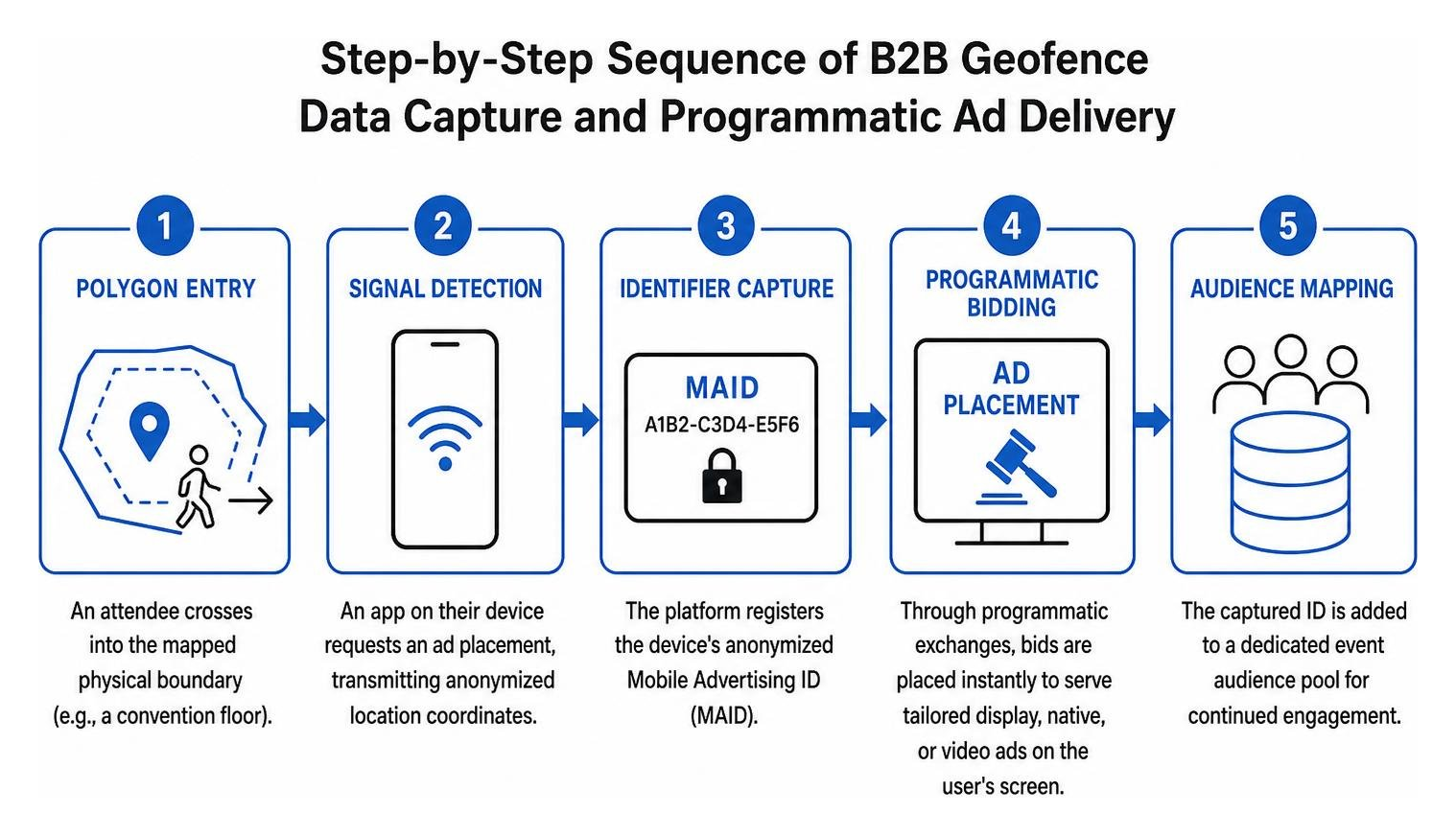
- Polygon Entry: An attendee crosses into the mapped physical boundary (e.g., a convention floor).
- Signal Detection: An app on their device requests an ad placement, transmitting anonymized location coordinates.
- Identifier Capture: The platform registers the device's anonymized Mobile Advertising ID (MAID).
- Programmatic Bidding: Through programmatic digital advertising exchanges, bids are placed instantly to serve tailored display, native, or video ads on the user's screen.
- Audience Mapping: The captured ID is added to a dedicated event audience pool for continued engagement.
Location Precision vs. IP-Based Office Targeting
Many B2B marketers rely heavily on corporate IP targeting. While IP routing works well for fixed corporate campuses, it struggles in dynamic event spaces and multi-tenant office parks. At major expos, public Wi-Fi networks rotate IP assignments constantly, and cellular carriers pool thousands of mobile users under shared gateway IPs.
Precision polygon geofencing eliminates this guesswork. By drawing custom vector lines around individual building walls, we filter out perimeter foot traffic, highway passersby, and adjacent businesses. This ensures ad impressions reach professionals actively standing inside the target venue.
Way 1: Target High-Density Decision-Maker Hubs and Transit Routes
Maximizing event ROI begins by identifying where target buyers spend time throughout their business trip—not just when they stand directly in front of your exhibit.

Industry gatherings represent high-density clusters of pre-qualified decision-makers. By creating geofenced corridors along attendee journey paths, brands create multiple touchpoints before a prospect ever steps onto the trade show floor.
Capturing Satellite Venues: Partner Hotels, VIP Dinners, and Competitor Booths
High-value enterprise deals often develop away from noisy exhibition halls. By mapping satellite venues, you can maintain visibility during key decision-making windows:
- Executive Hotels: Set up dedicated polygons around official conference hotels to reach executives during morning preparation or evening wind-down hours.
- Competitor Conquesting: Draw precise boundaries around competing exhibitor booths or exclusive off-site happy hours, delivering messaging that highlights your key differentiators.
- Industry Dinners: Geofence private dining spaces and networking lounges where key buyers gather after hours.
Using day-parting controls, ad delivery can be synchronized with these environments—shifting from daytime booth promotions to evening invitations for VIP breakfast briefings.
Capturing In-Transit Decision-Makers Before They Hit the Trade Show Floor
Transit moments provide an uncluttered advertising environment. Decision-makers frequently check their devices while commuting between airports, hotels, and venues.
For example, high-impact transit campaigns—such as those showcased in the Dreamforce transit case study—illustrate the power of reaching mobile professionals. By leveraging ride-share platforms and in-transit media, participating brands engaged 94,000 riders heading to Dreamforce (surpassing the 40,000 registered in-person attendees) with an average view time of 175 seconds and a 2.1% click-through rate.
Reaching buyers during dedicated travel moments helps establish brand awareness early, positioning your team top-of-mind before the event agenda begins.
Way 2: Deploy Multi-Screen Formats Across Connected Devices
Capturing an attendee's mobile device ID at an event is only the first touchpoint. B2B purchases involve buying committees, formal evaluations, and extended review cycles. Delivering your message across multiple screens ensures sustained momentum.
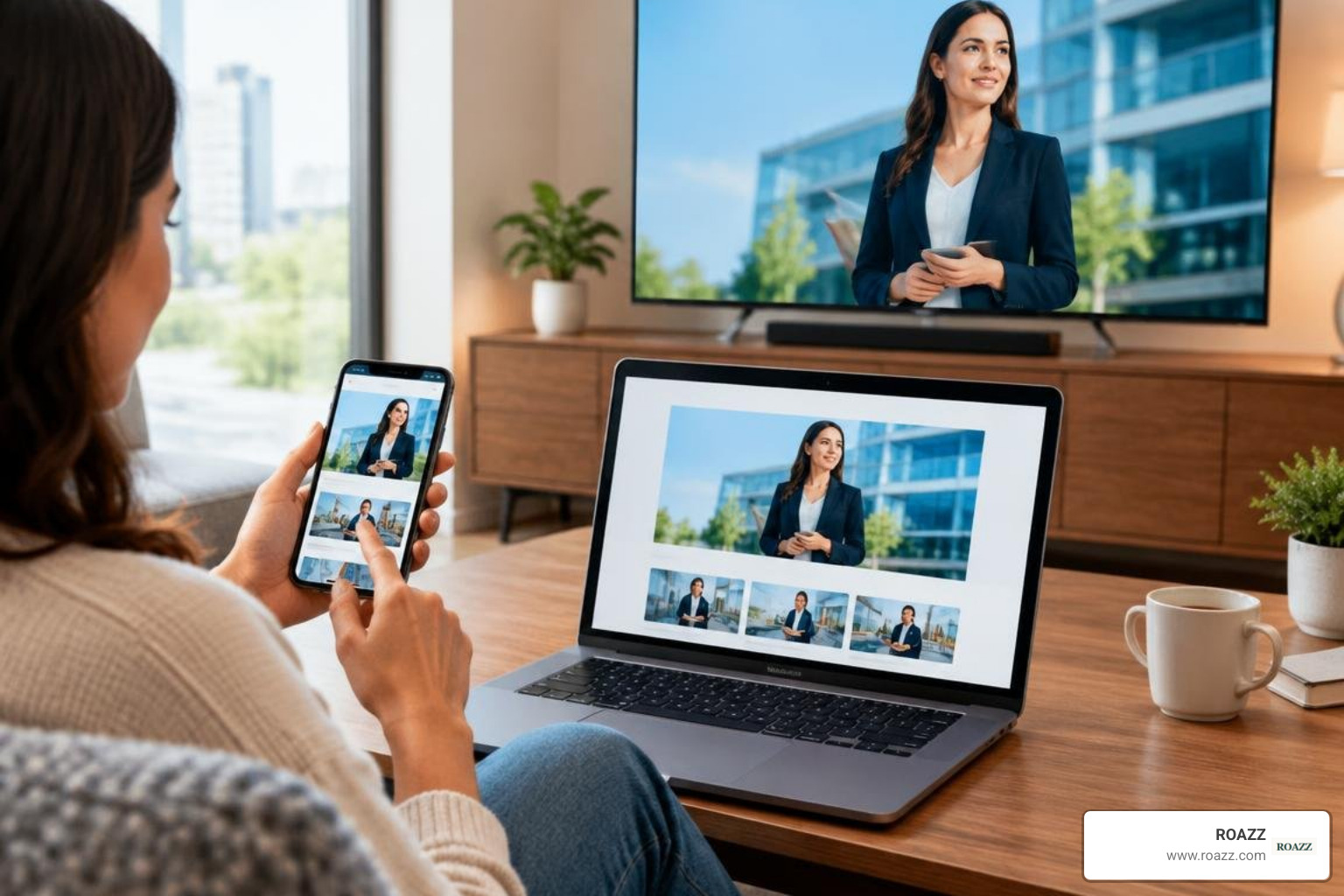
Relying solely on small mobile banners limits how effectively you can communicate complex value propositions. Pairing mobile targeting with larger formats creates a more comprehensive brand experience.
Building Multi-Device Sequences with B2B Geofencing Advertising
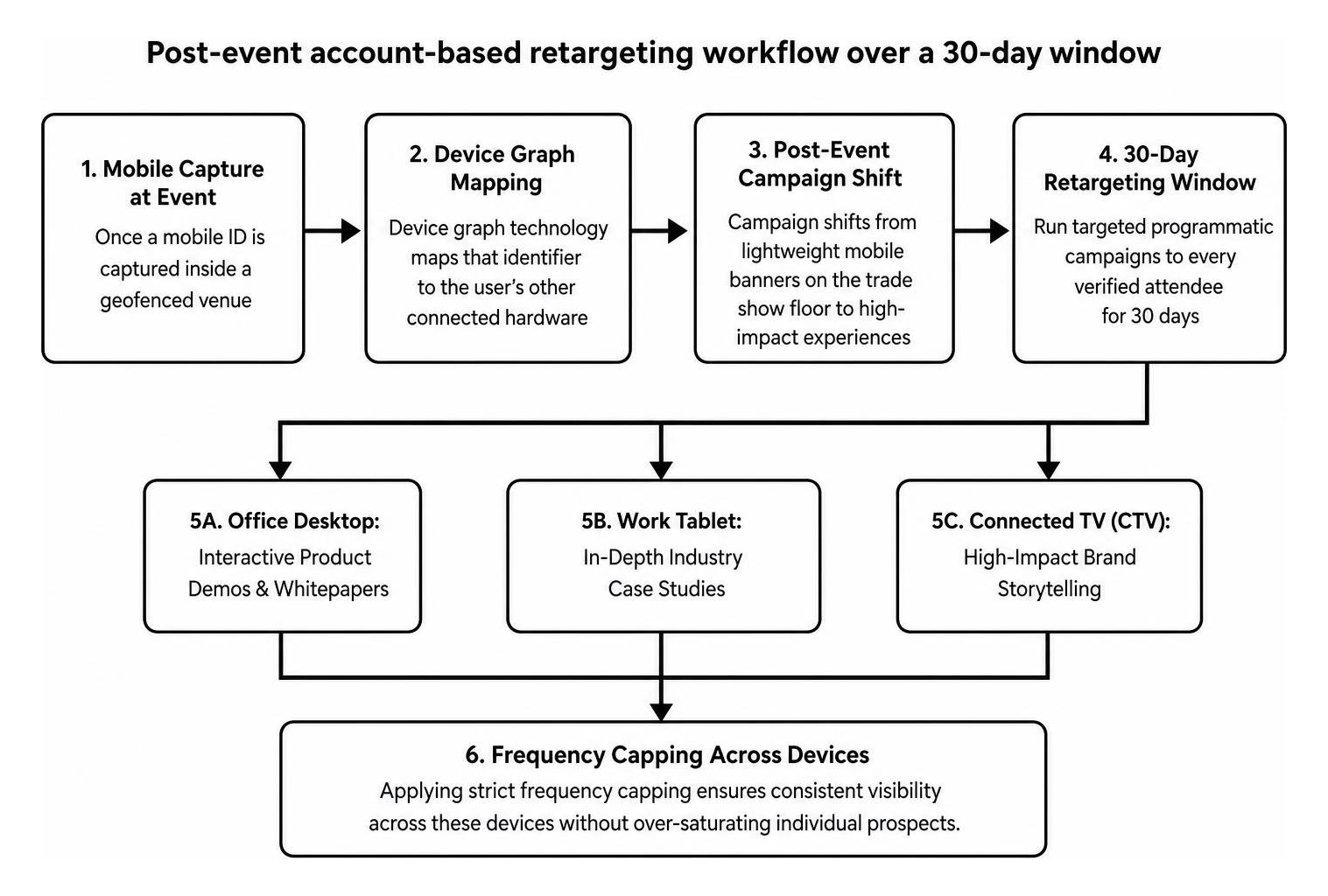
Once a mobile ID is captured inside a geofenced venue, device graph technology maps that identifier to the user’s other connected hardware—including office laptops, home desktops, tablets, and Connected TV (CTV) screens.
Through cross-device retargeting, your campaign shifts from lightweight mobile banners on the trade show floor to high-impact desktop experiences and streaming video ads once the executive returns to their workspace.
Applying strict frequency capping ensures consistent visibility across these devices without over-saturating individual prospects.
Designing Creative Angles That Drive In-Event and Post-Event Action
Ad creative must align directly with the prospect's immediate context. Splitting your creative strategy into two distinct phases yields stronger engagement:
- During the Event (Immediate Action): Keep copy simple and actionable. Highlight booth numbers, live stage presentation times, interactive product demos, or exclusive event-only giveaways.
- Post-Event (Evaluation & Intent): Shift copy toward problem-solving. Offer downloadable industry reports, ROI calculation tools, on-demand session recaps, or direct links to book personalized software demonstrations.
According to verified audience targeting data programs, combining structured account lists with intent-rich audience segments allows B2B marketers to target active decision-makers with significantly higher accuracy than broad display networks.
Way 3: Squeeze 30-Day Post-Event ROI with Account-Based Retargeting
The real commercial value of event geofencing develops during the 30 days following the conference. While competitors pack up their booths and rely on generic email blasts, you can run targeted programmatic campaigns to every verified attendee.
High-Converting Post-Event Ad Angles
- The Executive Summary: "Missed our presentation at Booth #402? Download the executive briefing on automated supply chain resilience."
- The ROI Proof Angle: "See how peer industrial firms achieved a 2,609% ROI within six months of deployment."
- The Peer Benchmark: "How leading logistics teams are solving yard congestion in 2026."
- The Direct Demo Offer: "Schedule a 15-minute technical review tailored to your facility’s floor plan."
Targeted niche campaigns demonstrate how focused location data can drive substantial outcomes. In specialized B2B industrial sectors, focusing spend on verified accounts has generated up to a 2,609% ROI, increased qualified sales conversations by 150%, and driven thousands of high-intent website interactions. Detailed performance breakdowns are available across our published case studies.
Integrating Captured Event Audiences into CRM and ABM Pipelines
Geofenced audiences should not operate in isolation from your primary sales tech stack. Connecting captured mobile IDs and matched accounts into your Customer Relationship Management (CRM) platform enables automated sales workflows:
- Account Matching: Match captured device clusters against your target Account-Based Marketing (ABM) lists to identify which priority accounts attended the event.
- Intent Scoring: Escalate account lead scores when multiple devices from a target company engage with post-event display or video sequences.
- Sales Notification: Alert dedicated account executives when key accounts demonstrate surging engagement, allowing for well-timed, relevant outreach.
Measuring Post-Click Conversions and Real Business Value
At ROAZZ, our performance marketing philosophy centers on tracking tangible business outcomes rather than vanity metrics. While impressions and clicks provide operational feedback, actual marketing success is measured through:
- Post-Click Demo Bookings: Direct meeting requests scheduled through dedicated campaign landing pages.
- Pipeline Acceleration: Reductions in sales cycle length for target accounts exposed to multi-screen messaging.
- Cost Per Qualified Lead (CPQL): Total ad spend divided by sales-qualified opportunities generated.
- Direct Revenue Attribution: Closed-won deal value matched back to target accounts exposed to geofenced ad delivery.
Campaign Execution: Costs, Lead Times, and Best Practices
Executing a successful B2B geofencing campaign requires structured preparation and proper resource allocation.
Understanding common pricing models and production timelines helps ensure your campaign launches smoothly before event doors open:
- Budget Expectations: Base event geofencing packages generally start between $1,800 and $4,500+ per event, depending on chosen formats (display, streaming video, or CTV) and retargeting scope.
- Pricing Metrics: Campaigns typically operate on a standard Cost-Per-Mille (CPM) structure, allowing for flexible scaling based on target audience density.
- Lead Times: Finalize your venue mapping and insertion orders at least 14 days prior to the event. Creative assets and landing pages should be uploaded and tested 7 days before launch to allow for network compliance reviews.
- Creative Iteration: Prepare at least three distinct ad creative sets to facilitate ongoing A/B testing and smooth transitions between in-event and post-event messaging.
To understand how our team structures, deploys, and attributes location-based campaigns from start to finish, review our performance methodology on how it works.
Frequently Asked Questions about B2B Geofencing
How does B2B geofencing ensure privacy and user consent?
B2B geofencing operates in compliance with international privacy frameworks, including GDPR, CCPA, and CPRA. The technology does not collect Personally Identifiable Information (PII) such as personal names, phone numbers, or email addresses.
Instead, data exchanges rely on anonymized Mobile Advertising IDs (MAIDs) transmitted through mobile applications where users have explicitly granted location permissions. All audience data is aggregated and processed safely through compliant programmatic exchanges.
What click-through rates and conversion metrics should B2B marketers expect?
Standard B2B display advertising across broad networks typically averages click-through rates between 0.06% and 0.08%. Because geofenced campaigns deliver highly relevant, context-aware messaging to verified in-person audiences, CTRs frequently reach 0.80% or higher—often outperforming standard industry benchmarks by more than 10x.
However, campaign optimization should always prioritize bottom-of-the-funnel outcomes, such as demo bookings, inbound calls, and pipeline revenue.
How does geofencing integrate with broader ABM and paid search strategies?
Geofencing works best as a specialized component of an omnichannel growth strategy. When paired with high-intent search campaigns managed by a specialized PPC management agency, geofencing builds account awareness that lifts search click-through rates and lowers organic conversion friction.
Prospects who see your brand at an industry event are significantly more likely to click your search ads and convert on landing pages when evaluating solutions later.
Maximizing Event ROI with ROAZZ
In-person trade shows and conferences represent significant investments. Simply setting up a booth and hoping the right decision-makers walk by leaves too much revenue to chance.
At ROAZZ, we provide dedicated performance-marketing solutions that plan, launch, and optimize campaigns centered on measurable post-click outcomes. Rather than focusing on superficial metrics, our team optimizes spend toward high-intent actions—driving verified appointments, product demos, qualified pipeline opportunities, and closed revenue.
Ready to turn your next industry conference into a reliable pipeline engine? Explore our performance marketing services to design a tailored B2B geofencing campaign that delivers measurable return on your event marketing spend.