5 High-Converting Email Marketing Automation Sequences Every Marketer Needs
The Strategic Power of Email Marketing Automation for Modern ROI

High-converting email marketing automation sequences are event-driven workflows that send the right message at the moment a prospect shows intent, such as signing up, abandoning a cart, or making a purchase. These sequences drive revenue by replacing generic batch sends with contextual, real-time delivery, which increases engagement and converts more post-click actions into sales and repeat purchases.
Marketing teams often find themselves trapped on a content treadmill, drafting manual campaigns week after week. While scheduled newsletters keep a brand visible, they rarely deliver the targeted precision needed to drive substantial post-click revenue. Event-driven triggers fundamentally alter this dynamic by delivering messages at the exact moment a prospect demonstrates clear intent.
| Dimension | Traditional Broadcast Campaigns | Event-Driven Automated Workflows |
|---|---|---|
| Trigger Mechanism | Scheduled manual batch sends | Real-time user behaviors or profile updates |
| Audience Scope | Static lists or broad segments | Dynamic, granular real-time segments |
| Contextual Timing | Sender's schedule | Immediate recipient interaction window |
| Revenue Impact | Baseline transactional returns | Up to 14x higher revenue per recipient |
| Operational Effort | High recurring creation time | Upfront setup with continuous background returns |
Platforms designed for modern messaging enable brands to build deep behavioral profiles that turn raw click data into predictable conversion pipelines.
Email Marketing Automation vs Traditional Broadcast Campaigns
Traditional email campaigns rely on static lists and fixed schedules. When you send a single message to an entire database on a Tuesday morning, only a small fraction of recipients are actively considering a purchase. The rest may find the message irrelevant, leading to lower engagement and higher unsubscribe rates.
In contrast, automated workflows respond directly to individual actions. Whether a prospect signs up for a newsletter, views a pricing tier, or leaves an item in a digital cart, the system reacts immediately. By replacing generic blasts with contextual delivery, your brand delivers relevant information precisely when customer attention peaks.
Core Business Benefits: Revenue, Retention, and Efficiency
The commercial impact of automated messaging is substantial:
- Revenue Multiplier: Automated messages generate over 14x more revenue per recipient than manual campaigns.
- Lead Generation: Organizations utilizing automated workflows generate twice as many qualified leads as those relying solely on manual outreach.
- Engagement Lift: Tailoring content to user actions can increase open rates by up to 18.8% over generic broadcasts.
- High-Leverage Volume: Automated messages account for roughly 2% of overall email sends in e-commerce, yet they frequently generate up to 30% of total email revenue.
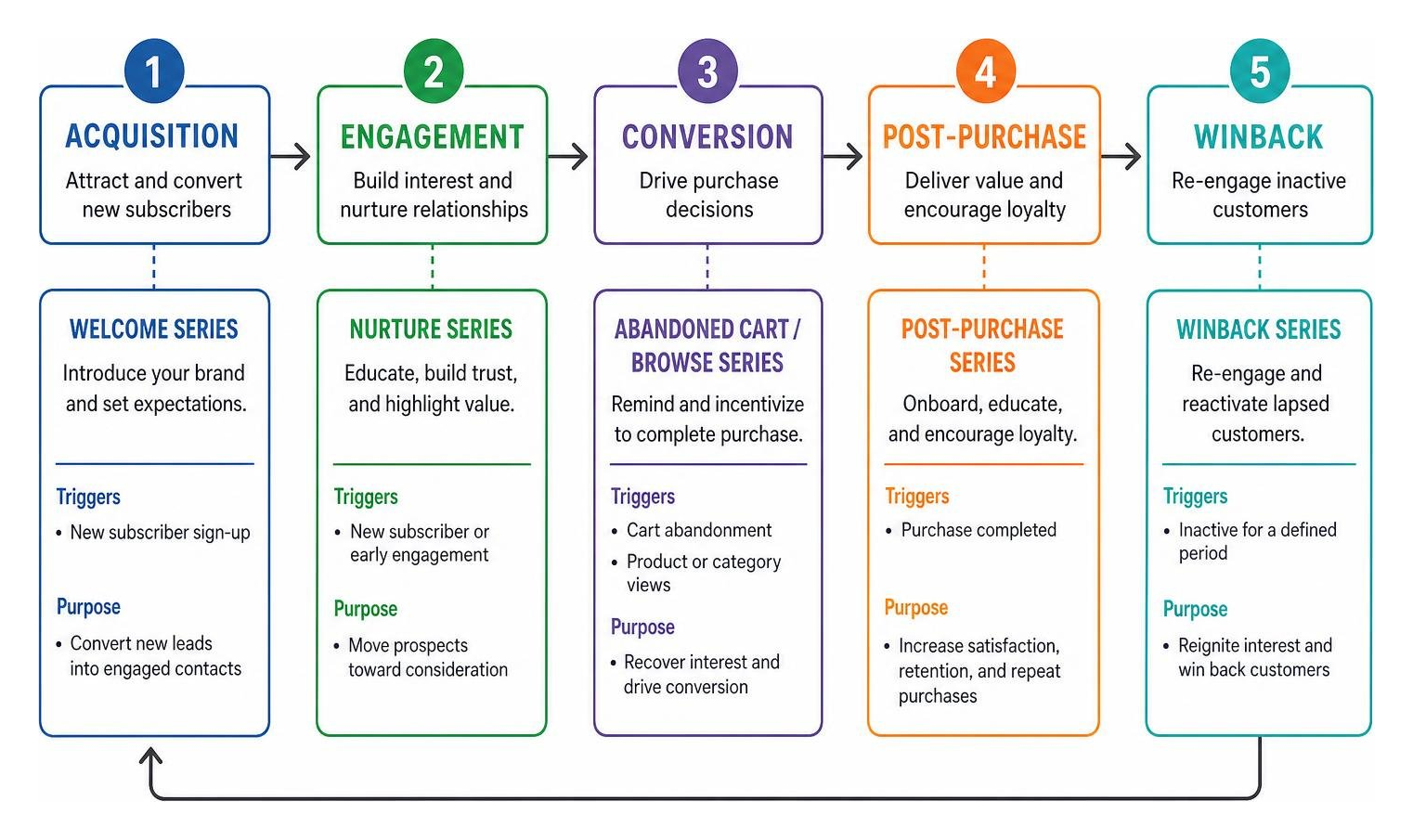
5 Core Sequences That Drive Maximum Conversion and Revenue
To build a resilient revenue engine, focus on the five lifecycle workflows that deliver the highest measurable returns.
1. The Multi-Step Welcome and Onboarding Series
The welcome series sets the tone for your subscriber relationship. When a visitor joins your list, their purchase intent is at its highest point.
- Immediate Delivery (Email 1): Deliver the promised incentive (such as a discount code, checklist, or guide) within minutes. Introduce your core value proposition and set clear expectations regarding future communication.
- Brand Story & Social Proof (Email 2 - 24 to 48 hours later): Highlight your founding mission, customer testimonials, and notable press coverage to build credibility.
- Product Discovery & Category Education (Email 3 - 3 to 4 days later): Showcase best-selling collections, case studies, or interactive guides based on the preferences indicated during signup.
2. High-Intent Cart and Browse Abandonment Sequences
Cart abandonment represents immediate lost revenue. A structured recovery sequence captures high-intent shoppers before they look to alternatives.
- Step 1 (1 hour post-abandonment): A helpful reminder featuring dynamic product images, exact cart contents, and customer service contact details.
- Step 2 (24 hours post-abandonment): Address common hesitations by emphasizing free shipping, satisfaction guarantees, return policies, or peer reviews.
- Step 3 (48 to 72 hours post-abandonment): Create urgency with a limited-time incentive or final cart expiration notice.
Browse abandonment sequences operate similarly, triggering when an identified user browses specific product pages without adding items to their basket.
3. Post-Purchase Nurture, Review Generation, and Cross-Sell Flows
The customer relationship deepens after the initial transaction. A well-designed post-purchase flow maximizes customer lifetime value (LTV):
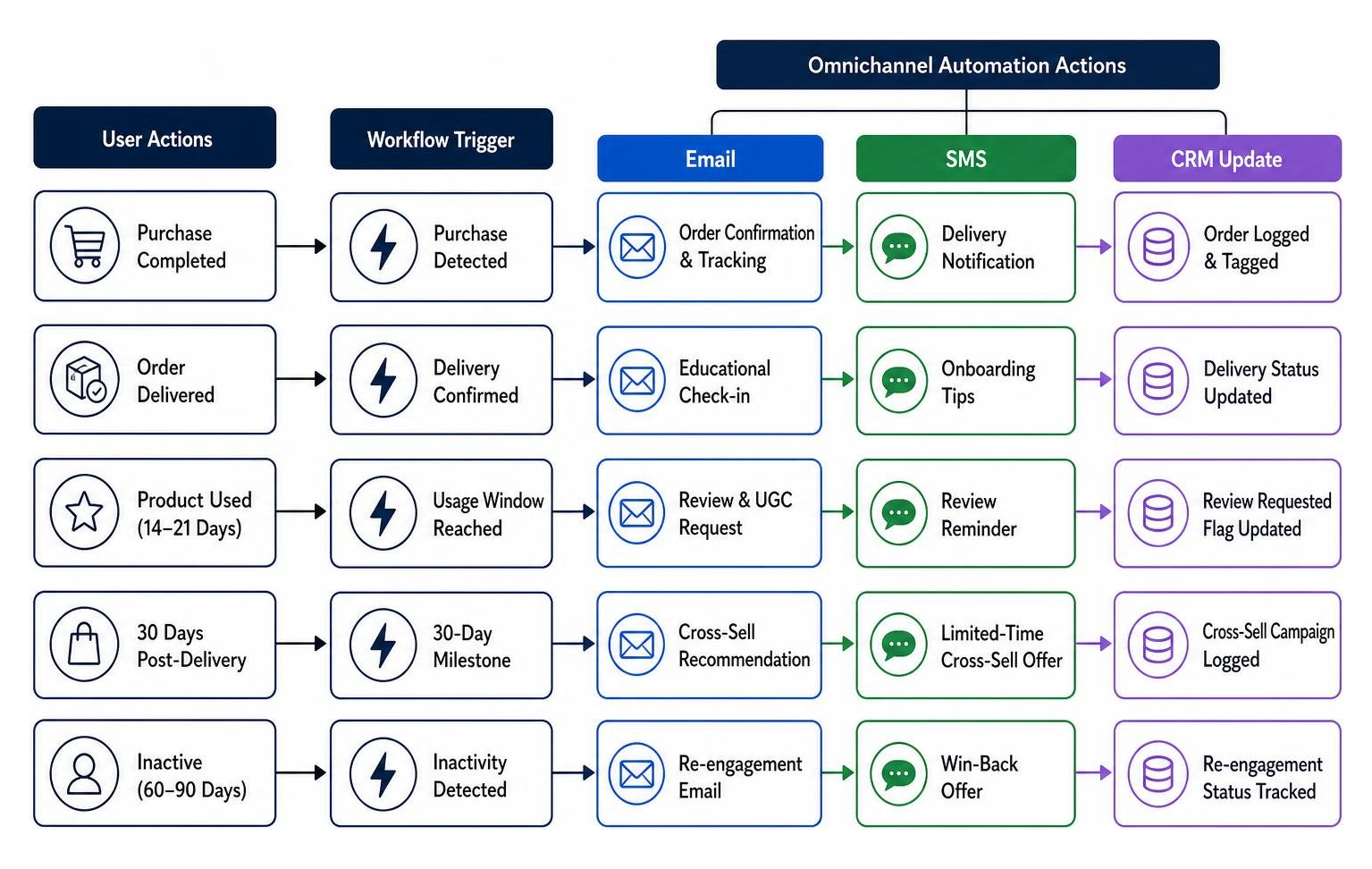
- Transactional Confirmation & Anticipation: Provide real-time tracking details alongside helpful tips on how to use the product or service.
- Educational Check-in (7–10 days post-delivery): Offer tutorials or usage best practices to ensure a positive onboarding experience.
- Review & UGC Request (14–21 days post-delivery): Request an honest product review or photo submission while product satisfaction remains high.
- Targeted Cross-Sell (30 days post-delivery): Recommend complementary products or consumables based on previous purchase history.
4. Behavioral Re-Engagement and Win-Back Workflows
Customer databases naturally experience attrition over time. A win-back flow re-engages dormant subscribers before they affect your overall deliverability.
- Gentle Check-In (60–90 days inactive): Highlight what is new, popular, or updated since their last visit.
- Exclusive Re-activation Offer: Provide a dedicated discount, upgrade, or perk to encourage a return visit.
- Sunset Policy & Opt-Out Notice: If a contact remains unresponsive after several attempts, notify them that they will be removed from your active list. This protects your sender reputation and keeps engagement metrics accurate.
5. Milestone, VIP Loyalty, and Lifecycle Triggers
Milestone messages reward ongoing loyalty and reinforce personal connections with your brand:
- Birthday & Anniversary Celebrations: Send a personalized greeting alongside an exclusive annual reward.
- VIP Tier Unlocks: Acknowledge when a customer reaches a defined spend threshold and provide early access to new products or dedicated support.
- Predictive Replenishment: Calculate average consumption cycles for consumable goods and automate re-order reminders just before the product runs out.
How to Build an Omnichannel Automation Architecture Step-by-Step
A high-performing automation setup connects seamlessly with your wider customer acquisition channels. For teams wanting to master how systematic campaign optimization works, synchronizing behavioral triggers across every digital touchpoint is critical.
Audience Segmentation and Dynamic Data Hygiene
Effective segmentation goes beyond basic demographics. Modern workflows organize audiences using real-time behavioral metrics:
- Recency, Frequency, Monetary (RFM) Scoring: Group contacts by how recently they converted, how often they buy, and their total spend.
- Zero-Party Preferences: Capture specific user preferences directly through quizzes, onboarding forms, and survey responses.
- Engagement Tiering: Categorize audiences into active, disengaged, and dormant segments to tailor send frequency appropriately.
Cross-Channel Integration Across SMS, CRM, and Social
Email automation performs best when combined with complementary channels:
- SMS Coordination: Use SMS for time-sensitive alerts, such as immediate flash sales or 1-hour cart recovery nudges, while utilizing email for detailed storytelling.
- CRM Synchronization: Automatically update deal stages and sales tasks inside your CRM when high-value accounts engage with email sequences.
- Paid Media Retargeting: Sync email segments with advertising platforms to exclude converted customers or serve targeted ads to abandoned shoppers.
Optimization Strategies: Metrics, Deliverability, and Avoiding Pitfalls
Systematic testing and technical maintenance ensure your automation engine continues to produce sustainable returns.
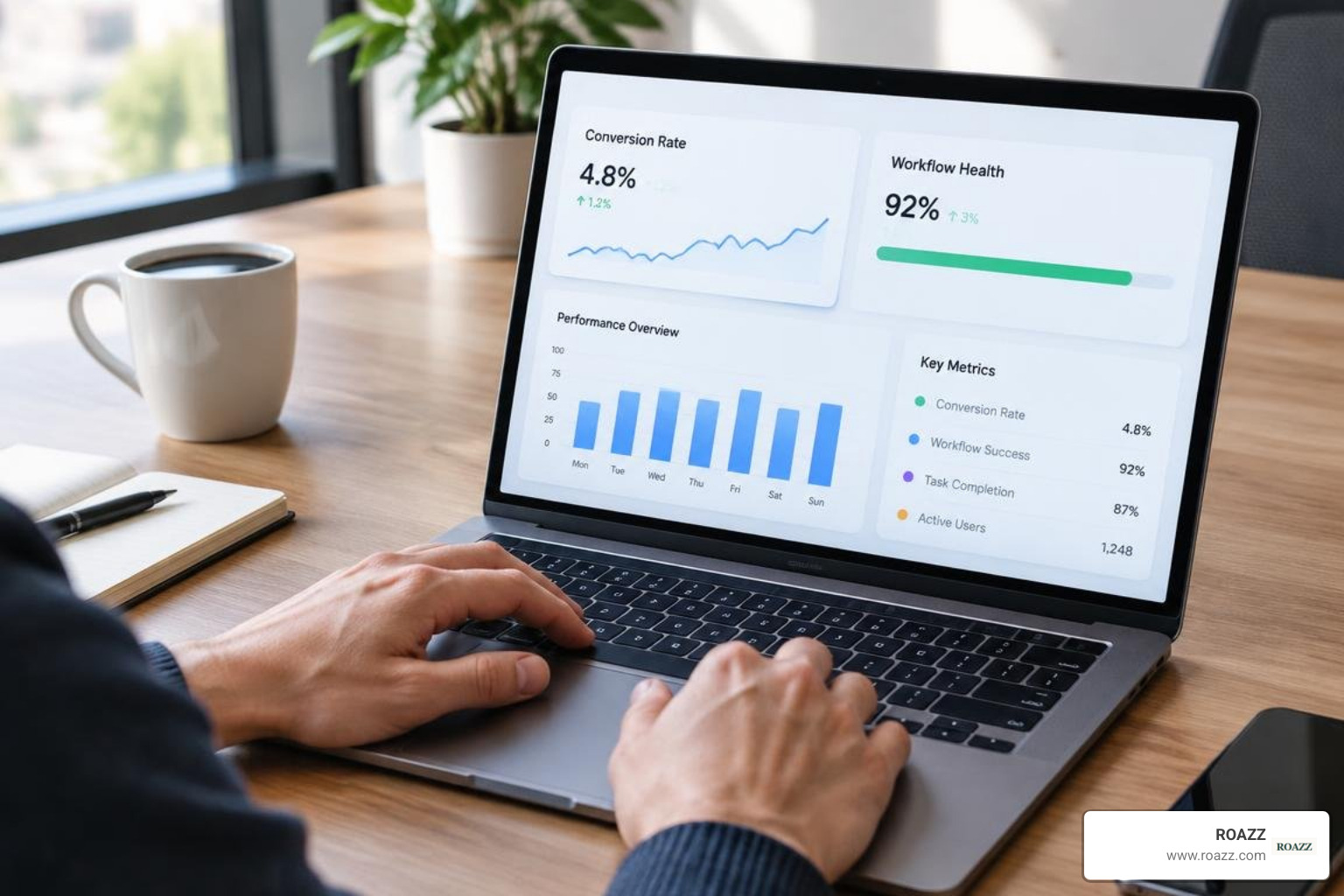
Scaling Personalization with AI-Powered Email Marketing Automation
Modern artificial intelligence simplifies workflow optimization across several operational areas:
- Send-Time Optimization: Machine learning models predict individual recipient habits to deliver emails when they are most likely to open them.
- Predictive Analytics: Identify churn risks and calculate predicted customer lifetime value to prioritize high-margin retention workflows.
- Multivariate Testing: Test subject line variations, incentive structures, and call-to-action designs continuously to identify top-performing combinations.
Deliverability Best Practices and Critical Traps to Avoid
Even high-converting copy fails if messages land in the spam folder. Maintain peak inbox placement with these best practices:
- Authentication Protocols: Configure SPF, DKIM, and DMARC records on your sending domain to establish technical legitimacy.
- Frequency Governance: Set global sending limits so subscribers enrolled in multiple flows do not receive too many messages in a single day.
- Rigorous Workflow Testing: Audit active triggers, links, dynamic tags, and branch logic regularly to prevent broken user experiences.
Frequently Asked Questions About Automated Lifecycle Campaigns
Looking for deeper guidance on campaign setup? You can review additional insights by exploring our answers to common strategy questions.
How long does it take to build and deploy full email automation sequences?
A standard lifecycle deployment takes between two to six weeks. This timeframe includes integrating data sources, designing branded templates, mapping conditional logic, and thoroughly testing live triggers across your tech stack.
What is the most profitable automated email sequence to launch first?
The cart abandonment flow delivers the fastest return on investment. Because it targets high-intent shoppers who have already selected products, recovering even 10% to 15% of these carts provides an immediate boost to top-line revenue.
How do I prevent automated emails from landing in spam folders?
Keep your sender reputation healthy by enforcing double opt-in, maintaining strict list hygiene, providing clear one-click unsubscribe links, and removing unengaged contacts through regular sunset flows.
Conclusion
Maximizing the return on your marketing investment requires prioritizing real post-click business outcomes over surface-level metrics. Rather than focusing entirely on clicks, top-performing brands design automated lifecycle sequences that systematically guide prospects toward sales, demos, and long-term retention.
By launching these five foundational flows, segmenting contacts based on actual purchase intent, and continuously refining messaging, your brand builds a reliable, scalable conversion engine. To scale your lifecycle strategy and allocate resources toward highest-performing, intent-driven actions, explore our dedicated performance marketing services.