How Competitor Geofencing Advertising Outperforms Traditional Proximity Targeting
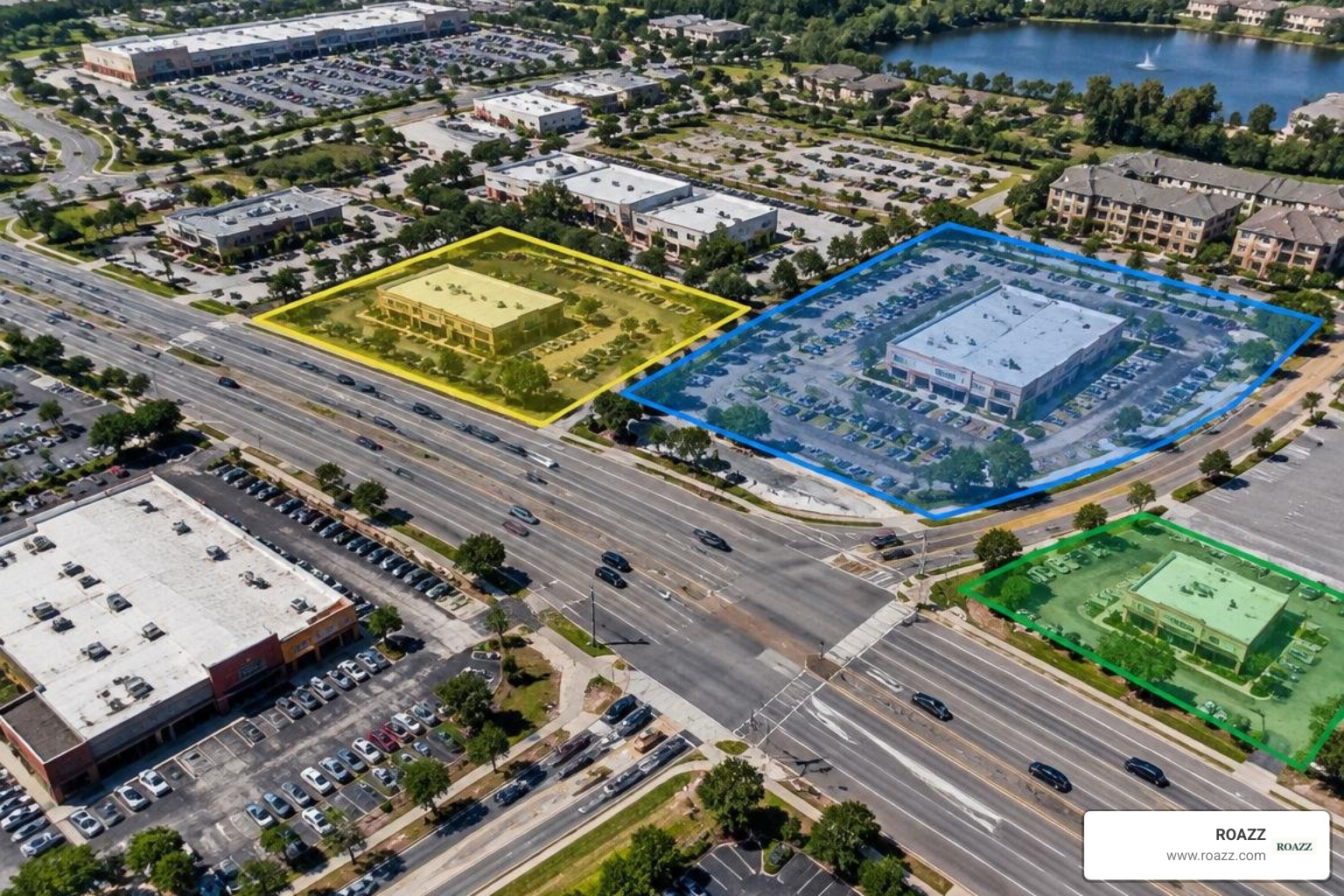
Competitor geofencing advertising captures in-market prospects by setting custom virtual polygon boundaries around other businesses' locations to serve targeted ads based on real-world foot traffic. By applying precision location intelligence within modern programmatic digital advertising platforms, businesses reach ready-to-buy consumers whose physical behavior proves immediate commercial interest, rather than guessing intent based on vague demographic data. According to the Interactive Advertising Bureau, location-based advertising has become a core component of modern digital campaigns because it connects digital messaging with real-world consumer behavior.
In contrast, traditional location marketing often relies on broad radiuses—drawing a 5-mile circle around a store or choosing entire ZIP codes. While broad targeting captures high impression volume, it indiscriminately blasts ads to uninterested passersby regardless of their intent to buy.
| Strategy Feature | Traditional Radius Targeting | Hyperlocal Polygon Geofencing |
|---|---|---|
| Boundary Precision | Circular buffer (e.g., 1–5 miles) | Custom multi-point parcel contour |
| Audience Qualification | Broad geographic residency | Verified real-world physical visits |
| Wasted Ad Spend | High (reaches uninterested passersby) | Minimal (focused strictly on intent zones) |
| Primary Metric | Raw reach and cheap impressions | Cost per booked appointment / visit |
| Contextual Relevance | Generic city-level messaging | Micro-moment specific to location trigger |
The Core Mechanics of Competitor Geofencing Advertising
Geofencing works by mapping latitude and longitude coordinates into closed virtual polygons. When mobile users with location-enabled applications cross these boundaries, their devices transmit anonymized signals that enter real-time bidding programmatic exchanges.
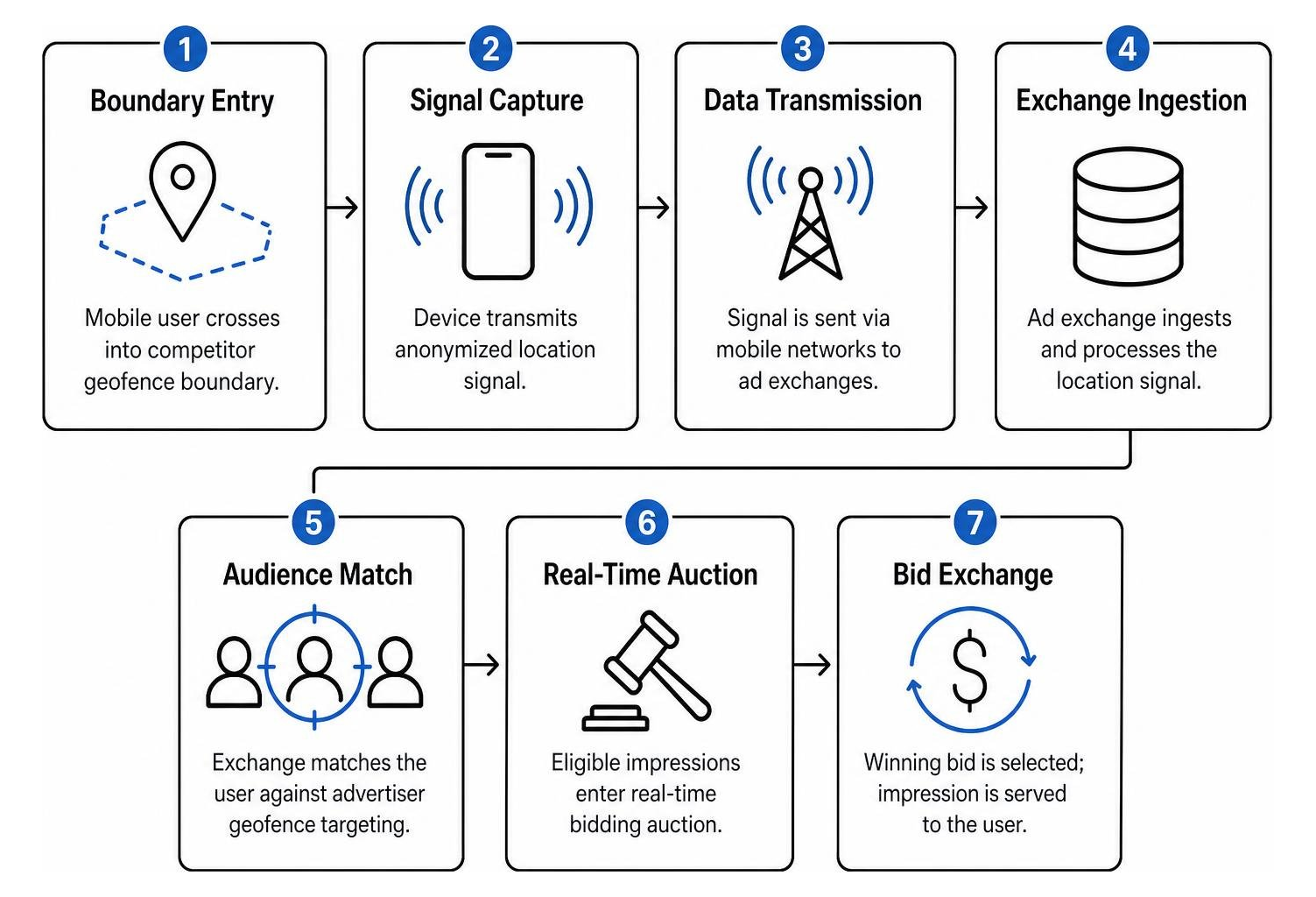
Rather than using default circle radiuses that spill into nearby highways and residential alleys, we trace exact parcel boundaries around other businesses' parking lots, showrooms, or active job sites. This ensures that every ad dollar bids exclusively on verified visitors.
Why Physical Proximity Signals High Buyer Intent
For local service businesses and retailers, physical proximity is one of the strongest predictive signals of consumer intent. A homeowner standing outside another provider's active renovation perimeter for 30 minutes is almost certainly comparing estimates, evaluating workmanship, or seeking immediate repairs.
Demographic data cannot tell you if someone's air conditioner broke this morning. But when a consumer walks into a wholesale parts warehouse or a competing repair facility, their physical presence provides immediate, undeniable proof of active demand.
Strategic Fence Placement and Signal Quality Filtering
Setting up effective geofences requires deliberate segmentation. If you fence an entire commercial district, you dilute your budget on low-intent foot traffic. To maximize return on ad spend, we build custom fences tailored to distinct stages of the buying journey.
Active Job Sites, Supplier Yards, and Trigger Events
High-converting campaigns typically segment location triggers into three distinct categories:
- Active Job Sites: When rival contractors park their work vans in a neighborhood, nearby neighbors take notice. Geofencing these residential blocks captures surrounding homeowners who are actively considering similar upgrades. Applying proven hyperlocal contractor geofencing strategies allows you to capitalize on the curiosity generated by visible neighborhood projects.
- Wholesale Supplier Yards and Trade Houses: Plumbing, electrical, and HVAC supply lots attract trade professionals and property owners sourcing urgent parts.
- Trigger Events and Micro-Zones: Localized weather events—such as hail storms or severe freezes—create instant emergency demand. Drawing fences around heavily impacted neighborhoods immediately after a storm connects you with property owners who need prompt inspections.
Filtering Signals with Dwell Time, Recency, and Context
Not every ping inside a geofence represents a qualified prospect. A delivery driver cruising past a business lot at 45 mph should never trigger an ad impression.
To isolate true buyers, we apply behavioral filters:
- Dwell Time Thresholds: Require a device to remain inside the perimeter for a minimum duration (e.g., 10 to 30 minutes) to filter out transient highway traffic.
- Look-Back Windows: Set strict recency limits (typically 24 hours to 14 days) so ads serve only while the buyer is still actively deciding.
- Dayparting Rules: Restrict data capture to operating business hours to exclude nighttime janitorial staff and off-hours commuters.
Campaign Execution: Creative, Frequency, and Legal Compliance
Executing a profitable geofencing campaign involves connecting precise targeting with clear creative messaging, strict frequency controls, and compliant advertising practices. You can learn more about how we build these interconnected systems through our multi-channel location-based workflows.
Ethical Standards for Competitor Geofencing Advertising
Targeting the physical perimeter of another business's location is a standard, legal mobile marketing practice, but your ad creative must adhere to clear ethical and legal guardrails:
- Never Use Other Businesses' Trademarks in Ad Copy: Do not name other providers or use their registered logos in your banners or text.
- Avoid Defamatory Messaging: Highlight your own strengths (such as transparent pricing, faster response times, or industry certifications) rather than disparaging other providers.
- Adhere to Data Privacy Regulations: Collect mobile ad identifiers (MAIDs) strictly through privacy-compliant programmatic exchanges that respect user consent settings.
Creative Micro-Moments and Localized Landing Pages
Ad creative must mirror the urgent need that put the user inside the geofence in the first place:
- Emergency Needs: If fencing a supply warehouse in July, advertise immediate same-day AC repair rather than routine autumn maintenance.
- Trust Anchors: Feature clear social proof, such as local review ratings, warranty guarantees, and verified licensing.
- Friction Reducers: Eliminate hurdles by offering instant online booking, free second opinions, or guaranteed arrival windows.
- Contextual Landing Pages: Route visitors to dedicated landing pages that reflect their local area (e.g., "Fast Storm-Damage Inspections in Your Neighborhood") rather than dropping them onto a generic homepage.
Frequency Capping, Device Suppression, and Budget Optimization
Hyperlocal audiences are naturally smaller than standard regional audiences. If you leave frequency unchecked, a neighbor living next to a three-month job site will see your ad hundreds of times, causing ad fatigue and draining your budget.
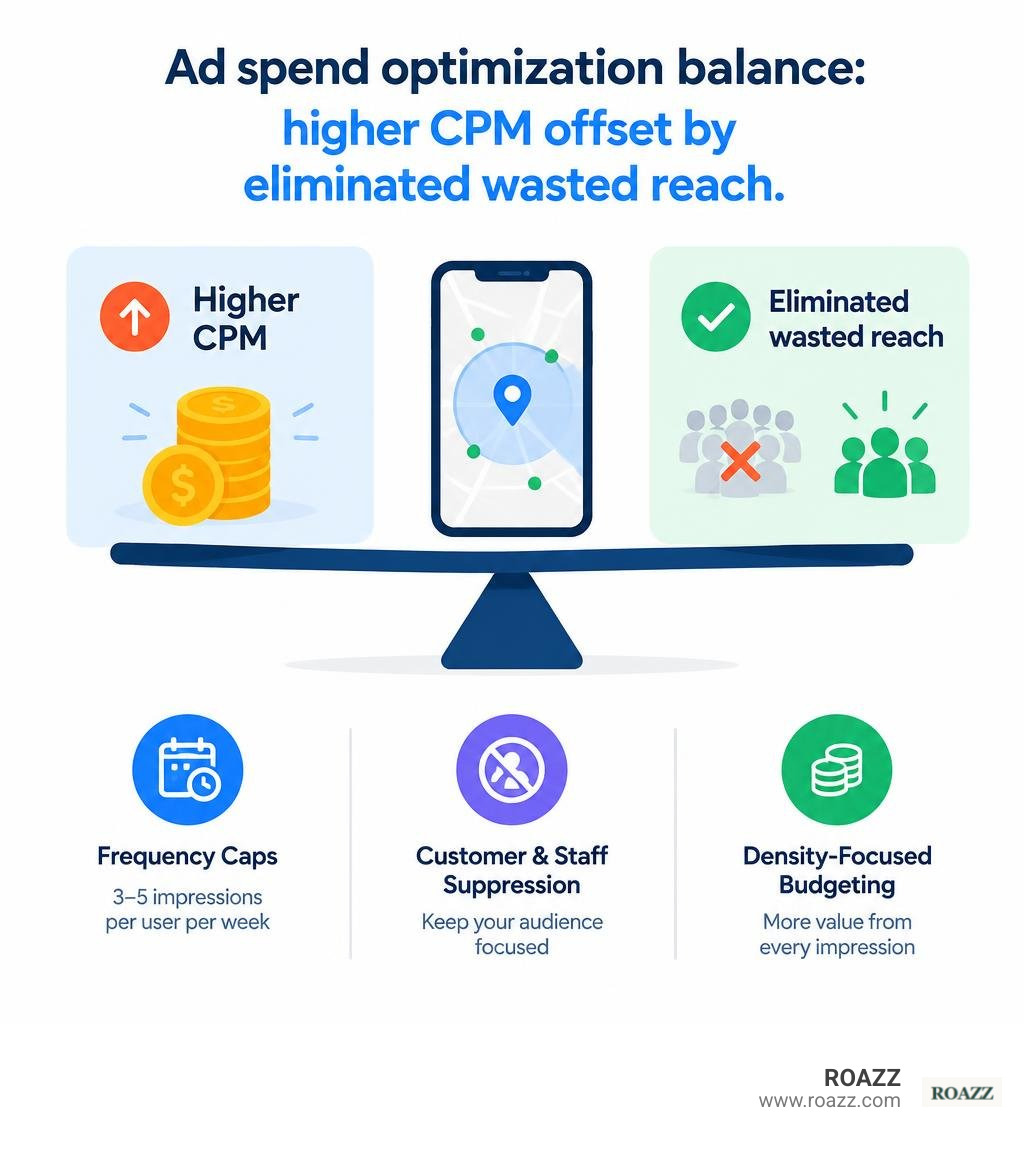
- Frequency Caps: Limit ad delivery to 3–5 impressions per user per week.
- Customer and Staff Suppression: Upload existing CRM client lists and staff device IDs to prevent serving ads to current customers or internal teams.
- Density-Focused Budgeting: Highly targeted geofences command higher cost-per-thousand (CPM) rates because the audience pool is small. However, eliminating wasted impressions outside your target zone significantly lowers your ultimate cost per booked appointment.
Seven-Day Implementation Plan and Performance Measurement

Launching a high-performing competitor geofencing campaign requires a structured, step-by-step rollout:
- Day 1: Location Mapping: Identify active business facilities, distributor yards, and priority job perimeters.
- Day 2: Polygon Boundary Construction: Draw precise, multi-point parcel polygons around selected target locations.
- Day 3: Behavioral Filtering Configuration: Establish dwell-time rules (e.g., 15+ minutes), operating dayparts, and recency look-back windows.
- Day 4: Creative & Landing Page Build: Design banner sets and build localized landing pages with strong trust anchors and simplified contact forms.
- Day 5: Audience Suppression Setup: Apply CRM exclusion lists, employee device blocks, and weekly frequency limits.
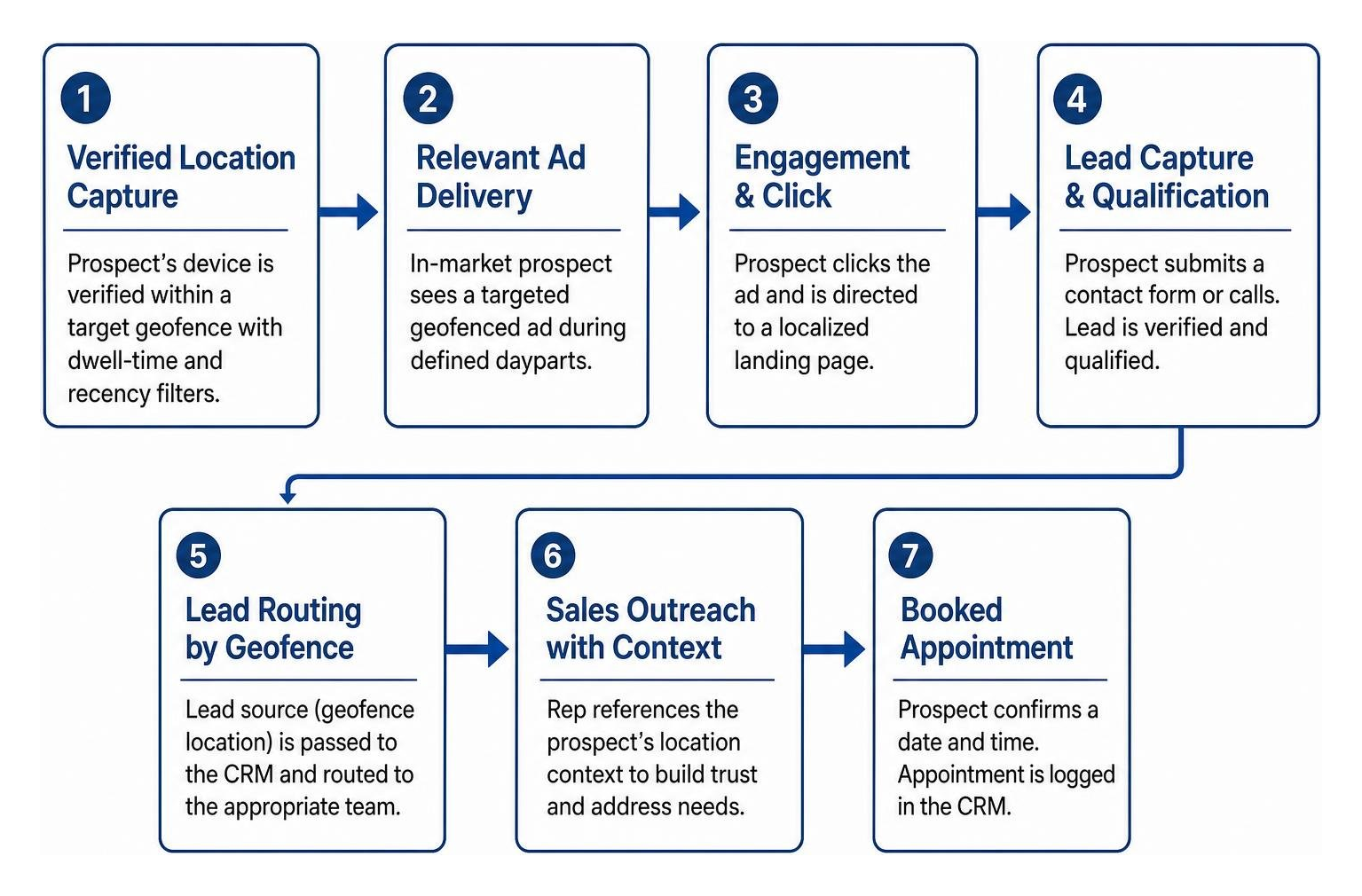
- Day 6: Lead Routing & Sales Notification: Integrate dynamic URL parameters with your CRM to tag incoming leads with their specific geofence origin.
- Day 7: Launch, Bidding, & Live Optimization: Launch programmatic campaigns and monitor bid density across all active polygons.
Routing Leads by Geofence Context
When a prospect submits an inquiry, pass the geofence source data directly into your sales pipeline. If an intake representative knows that an incoming lead originated near an active roofing job in a hail-damaged area, they can tailor their greeting immediately:
"We're currently handling several inspections in your neighborhood this week—would you like our team to provide a free second opinion on your estimate this afternoon?"
Contextual routing equips your sales team to convert inbound inquiries into confirmed appointments with greater efficiency.
Tracking Booked Appointments Over Vanity Impressions
High impression numbers and cheap clicks mean very little if they do not translate into paying customers. We measure marketing performance by tracking post-click outcomes:
- Cost Per Qualified Lead (CPQL): The cost to generate a verified, in-market contact form or inbound call.
- Cost Per Booked Appointment (CPBA): The actual ad spend required to get an estimator or technician onto a customer's property.
- Return on Ad Spend (ROAS): Real revenue generated from completed service contracts relative to campaign spend.
Frequently Asked Questions About Competitor Geofencing
How accurate is competitor geofencing for local businesses?
Modern polygon geofencing maps exact property parcel lines using high-precision GPS data. By setting tight polygon contours and combining them with dwell-time filters, you effectively eliminate accidental captures from adjacent sidewalks or roads.
Is it legal to geofence another business's location?
Yes. Fencing a commercial perimeter and delivering ads across public programmatic ad exchanges is completely legal. However, your ad creative must remain truthful, respect trademark guidelines, and avoid naming or disparaging other businesses directly.
What is the ideal frequency cap for a hyperlocal campaign?
For tight geographical boundaries, capping ad delivery at 3 to 5 impressions per user per week prevents audience fatigue while keeping your brand top-of-mind during active decision windows.
Conclusion
Competitor geofencing advertising replaces broad geographic guesswork with verified physical intent. By tracing precise polygon boundaries around active competitor sites, filtering for genuine dwell time, and serving context-driven creative, you intercept high-intent buyers right when they are ready to choose a provider.
At ROAZZ, our performance marketing focus is built on driving measurable business outcomes—like booked appointments, service calls, and pipeline revenue—rather than chasing vanity impressions. To start capturing in-market local demand across your service areas, explore our performance marketing services today.