What SEO Management Services Should Deliver

SEO management services put an outside team in charge of improving your organic search performance over time. A good partner fixes site issues, creates and updates content, builds relevant authority, and tracks the leads, sales, or donations that follow. Before you hire one, ask who does the work, how results are measured, and what happens when search results change.
The real return is not a higher ranking on its own. It is more qualified visitors taking actions that matter to your organization. This guide explains what to expect from a managed service and how to judge whether the investment is paying off.
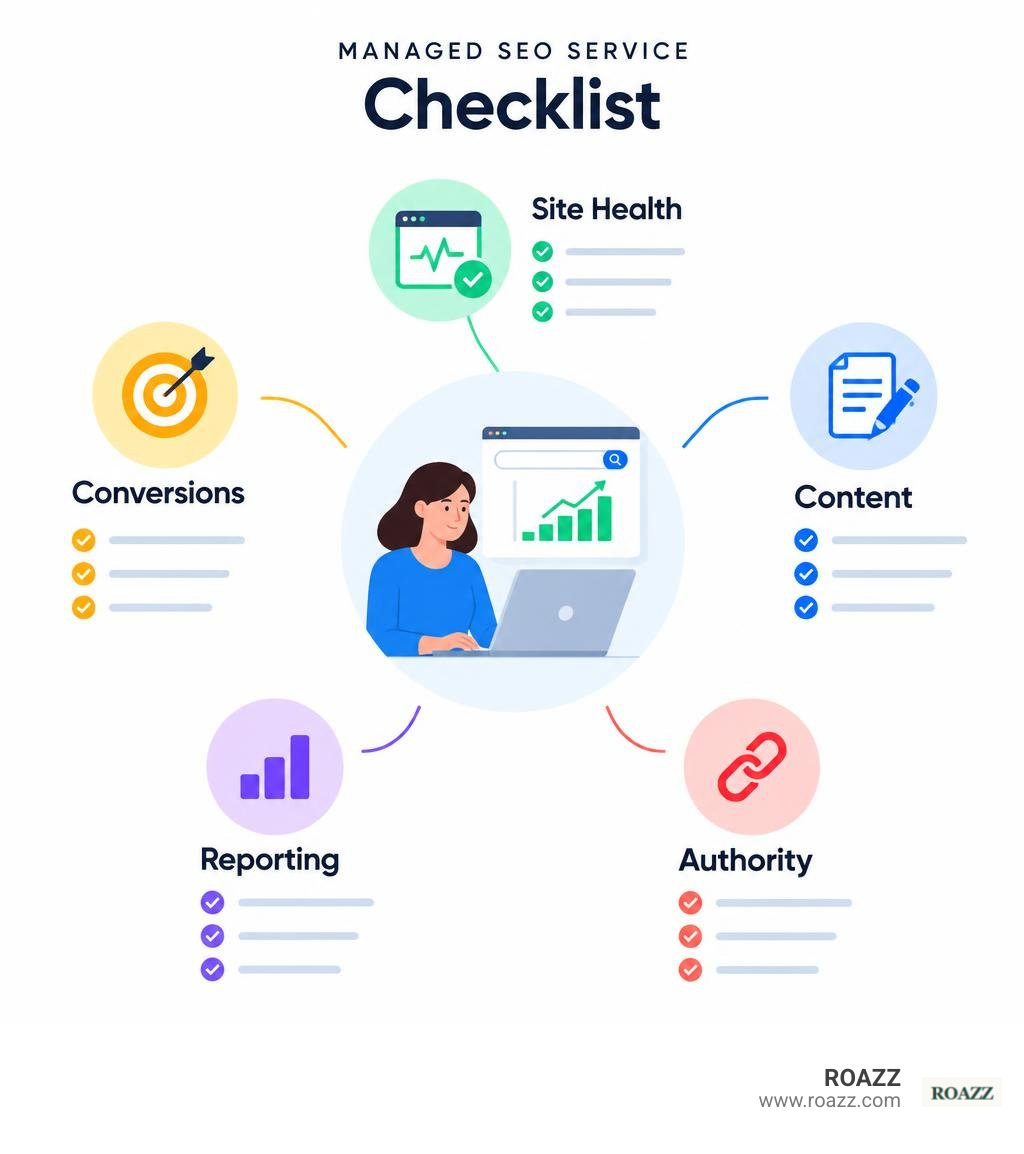
Core Pillars of Modern SEO Management Services
Organic search optimization is not a single checklist task you complete once and shelve indefinitely. Search engines continuously crawl the web, reassessing page relevance, technical health, and domain trust. Professional SEO management services operate across three interconnected pillars: technical infrastructure, on-page optimization, and off-page authority building.
When these three pillars work in harmony, search engines can easily discover your pages, comprehend your subject matter, and trust your domain enough to rank it above competitors.
| Dimension | One-Time SEO Audit / Setup | Ongoing SEO Management |
|---|---|---|
| Focus | Initial issue discovery and static fixes | Continuous technical health, new content, and link growth |
| Algorithm Adaptation | Static snapshot; obsolete after major core updates | Active adjustments to algorithmic shifts and generative AI changes |
| Content Strategy | Initial keyword mapping on existing URLs | Regular publishing, search intent updates, and topic clustering |
| Authority Building | Rarely included or limited to directory cleanup | Ongoing, manual white-hat link acquisition and digital PR |
| Outcome Tracking | Baseline metrics report delivered at project handoff | Continuous tracking of pipeline velocity, leads, and post-click revenue |
Technical SEO Auditing and Mobile Optimization
Technical SEO forms the foundation of any digital presence. If search engine bots cannot efficiently crawl, render, and index your website, even top-tier content will fail to rank.
Managing technical health requires constant vigilance over several key infrastructure items:
- Crawlability and Indexation: Setting up clean
robots.txtinstructions, maintaining dynamic XML sitemaps, and preventing index bloat from duplicate URLs or thin tag pages. - Mobile-First Experience: With over 51.3% of global web traffic originating from mobile devices, search engines index websites primarily using smartphone user-agents. Responsive design and seamless mobile navigation are strict requirements.
- Core Web Vitals and Page Speed: Google assesses real-world user experience signals, such as Largest Contentful Paint (LCP), Interaction to Next Paint (INP), and Cumulative Layout Shift (CLS). Fast-loading, stable layouts prevent visitors from bouncing before taking action.
- Site Architecture and Structured Data: Organizing directories logically and applying Schema.org markup (such as Organization, Article, Product, and FAQ schema) to help crawlers parse entity relationships.
Integrating these infrastructure adjustments into comprehensive marketing services ensures technical fixes are directly aligned with conversion performance across all organic touchpoints.
Strategic Content Optimization and Keyword Research
Search engines reward pages that satisfy search intent better than competing alternatives. Content optimization in a managed program involves continuous research, writing, formatting, and refreshing.
We focus on mapping high-intent search terms to specific commercial stages. Instead of targeting generic, vanity phrases with high search volumes and low purchase intent, managed optimization prioritizes keyword clusters that attract decision-makers. Every asset is structured to reinforce Google's E-E-A-T guidelines (Experience, Expertise, Authoritativeness, and Trustworthiness) by demonstrating first-hand domain insight, presenting verified data, and answering complex user queries without unnecessary fluff.
Regular competitor gap analyses uncover high-value search queries your competitors are winning, enabling your team to develop deeper, more authoritative resources that capture market share.
White-Hat Authority Building and Link Acquisition
High-quality content requires external validation to secure competitive rankings. Search engines view external links from reputable publications as votes of confidence in your domain's credibility.
Modern off-page optimization relies entirely on manual, white-hat acquisition methods. This includes strategic digital PR, expert quote placements, original research distribution, and unlinked brand mention reclamation. Modern search algorithms easily identify and penalize manipulative link schemes like private blog networks (PBNs) or automated bulk spam links. A sustainable managed approach secures contextual links on relevant, real-traffic websites, building sustainable link equity while safeguarding your business against algorithmic penalties.
How Ongoing SEO Adapts to AI Search and Algorithm Volatility
Search engines are far from static. Google introduces hundreds of algorithm changes per year—averaging over 1.5 updates per day—ranging from minor quality adjustments to sweeping core and spam updates.

At the same time, the search landscape has expanded to include AI-driven features like Google's AI Overviews, Perplexity, and conversational search tools. These engines leverage semantic retrieval and query fan-out techniques to synthesize direct answers from multiple web citations rather than simply listing ten blue links.
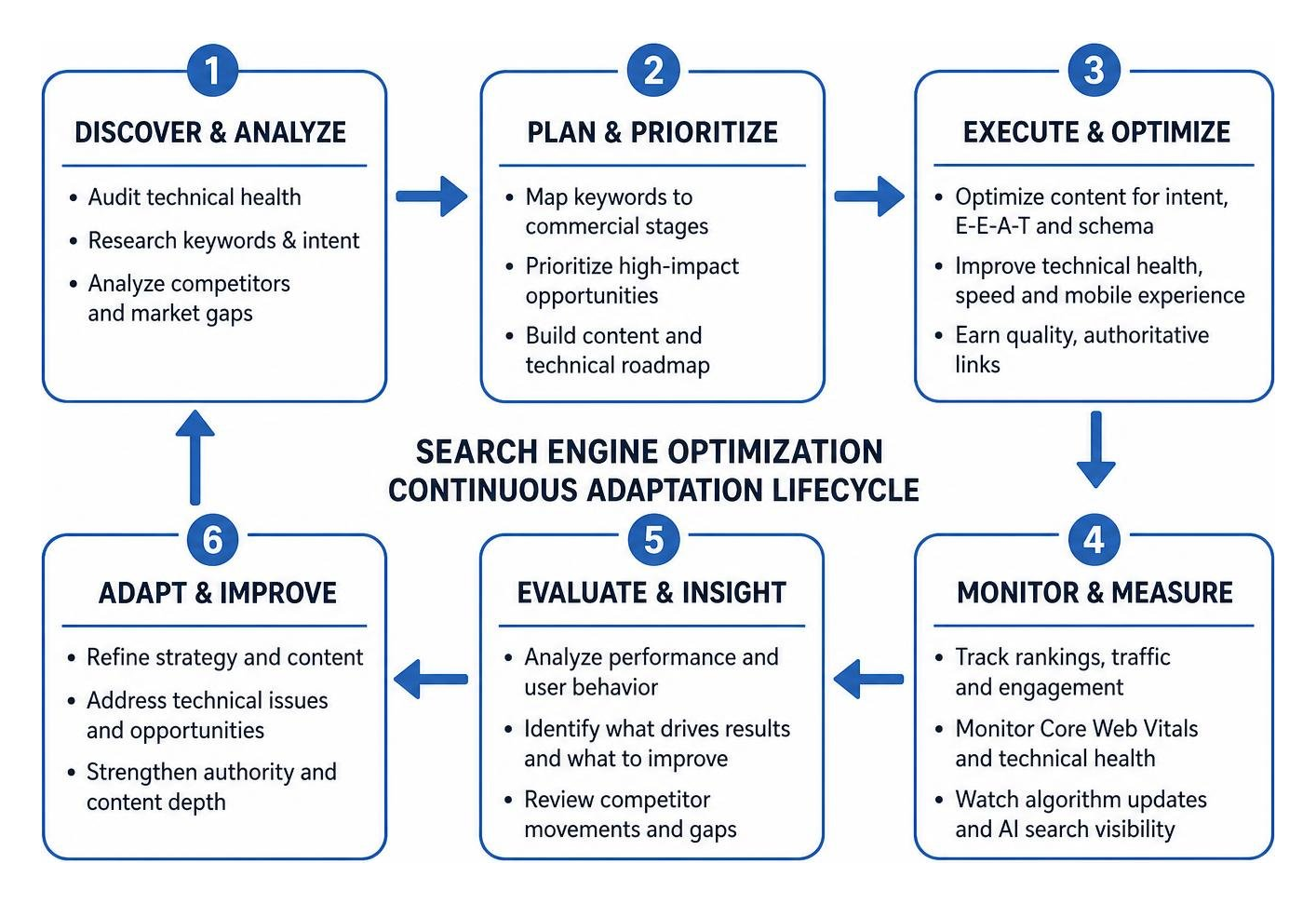
Generative Engine Optimization and AI Search Readiness
To stay visible across both traditional results and generative answers, modern management incorporates Answer Engine Optimization (AEO) and Generative Engine Optimization (GEO). These frameworks structure information so large language models and search engines can parse, trust, and quote your content as a primary source.
Key tactics include:
- Creating concise, definitional answer targets and FAQ blocks directly beneath major headings to win featured snippets and AI overview citations.
- Configuring
llms.txtand optimizing machine-readable data feeds to allow AI bots to process essential brand context. - Building deep entity authority by connecting your brand with recognized industry topics and authoritative external sources.
For companies looking to expand their organic search footprints across both classic and conversational interfaces, ROAZZ's full-funnel strategies help ensure your business remains visible across emerging AI search discovery channels.
What Distinguishes SEO Management Services from One-Time Fixes
A one-time SEO audit identifies errors present on a specific date, but it does not fix them, write new content, adapt to incoming core updates, or build new domain authority.
Dedicated management provides continuous execution:
- Active Crawl Health Monitoring: Detecting broken internal links, redirect loops, and indexing errors the moment they emerge.
- Systematic Content Refresh Cycles: Updating declining articles with fresh data, improved internal links, and expanded sections to protect existing rankings from competitor updates.
- Revenue Attribution and Strategy Shifts: Evaluating which organic pages drive actual conversions and reallocating resources to high-performing commercial queries.
Revenue Metrics and Timelines: What to Expect from Your Investment
At ROAZZ, we believe search optimization must be held accountable to the same performance standards as paid advertising. While traditional agencies report on vanity metrics like impressions and average keyword positions, true business ROI comes from measuring post-click outcomes: form submissions, qualified sales demos, inbound calls, subscriptions, and transactions.

Timeline to Measurable Organic Search Results
Search engine crawling, indexing, and algorithmic trust require time to build momentum. While paid search can be toggled on immediately, organic optimization compounds over months.
A realistic roadmap for managed campaigns looks like this:
- Month 1 (Discovery and Baseline): Technical audits, server log evaluation, competitive keyword clustering, analytics setup, and initial high-impact technical remediation.
- Months 2–3 (Early Momentum): Rollout of initial technical fixes, publishing of newly optimized target pages, and commencement of manual link outreach. Early indexing improvements and initial keyword position gains usually appear within 60 to 90 days.
- Months 4–6 (Compounding Growth): Established content begins ranking for secondary and long-tail keyword variations. Organic impressions translate into steady traffic increases, and high-intent landing pages drive higher conversion volumes.
- Months 6+ (Market Authority): Mature domain authority enables faster indexing of new assets, robust defensive rankings against competitors, and a noticeable reduction in blended customer acquisition costs (CAC).
To see how we structure our systematic execution cycles, explore how the optimization process works.
Measuring the Real Business ROI of SEO Management Services
To determine the real financial return of organic marketing, look beyond raw traffic counts. Tens of thousands of unqualified website visitors will not help your bottom line if none of them fit your buyer persona.
We evaluate organic marketing performance through rigorous revenue modeling:
- Organic Conversion Rate: The percentage of search visitors who complete a key commercial action (e.g., booking an appointment or completing a purchase).
- Pipeline Velocity and Lead Quality: Tracking organic touchpoints inside CRM platforms to measure how search visitors move through the sales cycle compared to other acquisition channels.
- Customer Acquisition Cost (CAC) Reduction: As organic search rankings mature, they deliver qualified visitors without ongoing per-click media fees, bringing down your blended acquisition cost over time.
Adopting comprehensive execution frameworks provides business owners with scalable, end-to-end support for multi-channel organic expansion. You can also view real-world examples of how data-led strategies translate into measurable customer acquisition across our verified enterprise case studies.
Selecting and Managing the Right Organic Search Partner
Choosing an organic marketing provider requires evaluating work methodologies, accountability standards, and technical expertise. An experienced partner acts as an extension of your growth team, taking complete ownership of organic pipeline generation.
White-Hat vs. Black-Hat Methodologies
Understanding the difference between ethical optimization and manipulative shortcuts is essential for protecting your brand equity.
- White-Hat SEO: Follows search engine webmaster guidelines. Focuses on user intent, fast site performance, original and authoritative content, clear site architecture, and relationship-driven outreach. Growth is safe, steady, and resilient against algorithmic updates.
- Black-Hat SEO: Relies on automated spam links, hidden keyword stuffing, doorway pages, and cloaking to manipulate search rankings. While these tactics can occasionally produce temporary spikes, they inevitably trigger algorithmic demotions or manual penalties that wipe out organic search visibility overnight.
A reliable partner relies exclusively on sustainable, white-hat techniques that protect your digital presence for the long term.
Executive Reporting and Channel Communication
Transparent communication is the cornerstone of a successful managed engagement. You should never be left wondering what tasks were completed or what results were achieved during a billing cycle.
Expect your search partner to provide:
- Transparent Sprint Roadmaps: Clear breakdowns showing completed technical fixes, published content assets, and acquired backlinks.
- Executive Dashboards: Real-time visibility into traffic trends, target keyword movements, and post-click conversions without confusing industry jargon.
- Regular Strategic Reviews: Monthly or quarterly strategy sessions to review performance against commercial benchmarks and adjust focus areas based on business goals.
For actionable frameworks on navigating changing algorithms, explore the latest insights and strategic updates on our blog.
Frequently Asked Questions About Search Engine Optimization Management
How long does it take for managed search campaigns to drive conversions?
Most websites begin seeing initial technical improvements and ranking movement within 60 to 90 days. Measurable lead and revenue increases typically compound between months 3 and 6 as search engines index updated content and recognize newly acquired link authority.
What is the difference between white-hat and black-hat organic techniques?
White-hat techniques follow search engine guidelines, prioritizing fast page experiences, people-first content, and manual outreach. Black-hat methods use deceptive tactics like automated link spam and hidden text, which create severe risks of algorithmic penalties and permanent domain de-indexing.
How do algorithm updates affect ongoing search performance in 2026?
Search engines update their ranking systems hundreds of times each year. Managed optimization constantly audits your site against these shifts, ensuring your technical architecture remains compliant, your content satisfies modern quality standards, and your brand is positioned for visibility in AI-assisted search environments.
Conclusion
Investing in organic search is one of the most effective ways to build a compounding, defensible customer acquisition channel. However, winning in organic search requires continuous technical maintenance, consistent content production, and active authority development.
At ROAZZ, we treat organic search as a dedicated revenue driver. Our performance marketing methodology bridges the gap between top-of-funnel search visibility and post-click outcomes, ensuring every optimization helps accelerate your pipeline, lower acquisition costs, and maximize lifetime customer value.
Ready to turn organic search into your most reliable customer acquisition channel? Partner with ROAZZ to scale your organic growth and start measuring the real return on your marketing investment today.